I still remember the first time I made candied yams with toasted pecans for Thanksgiving. My cousin had dared me to bring something other than my usual green bean casserole, and in my hubris, I decided to tackle what I thought would be a simple side dish. Three hours later, I had a sticky mess of burnt sugar, undercooked yams, and a kitchen that smelled like a candle factory exploded. The pecans? Let's just say they resembled tiny charcoal briquettes. But here's the thing — that disaster led me down a rabbit hole of testing, tweaking, and perfecting what I now confidently declare is the most irresistible version of this classic dish you'll ever taste.
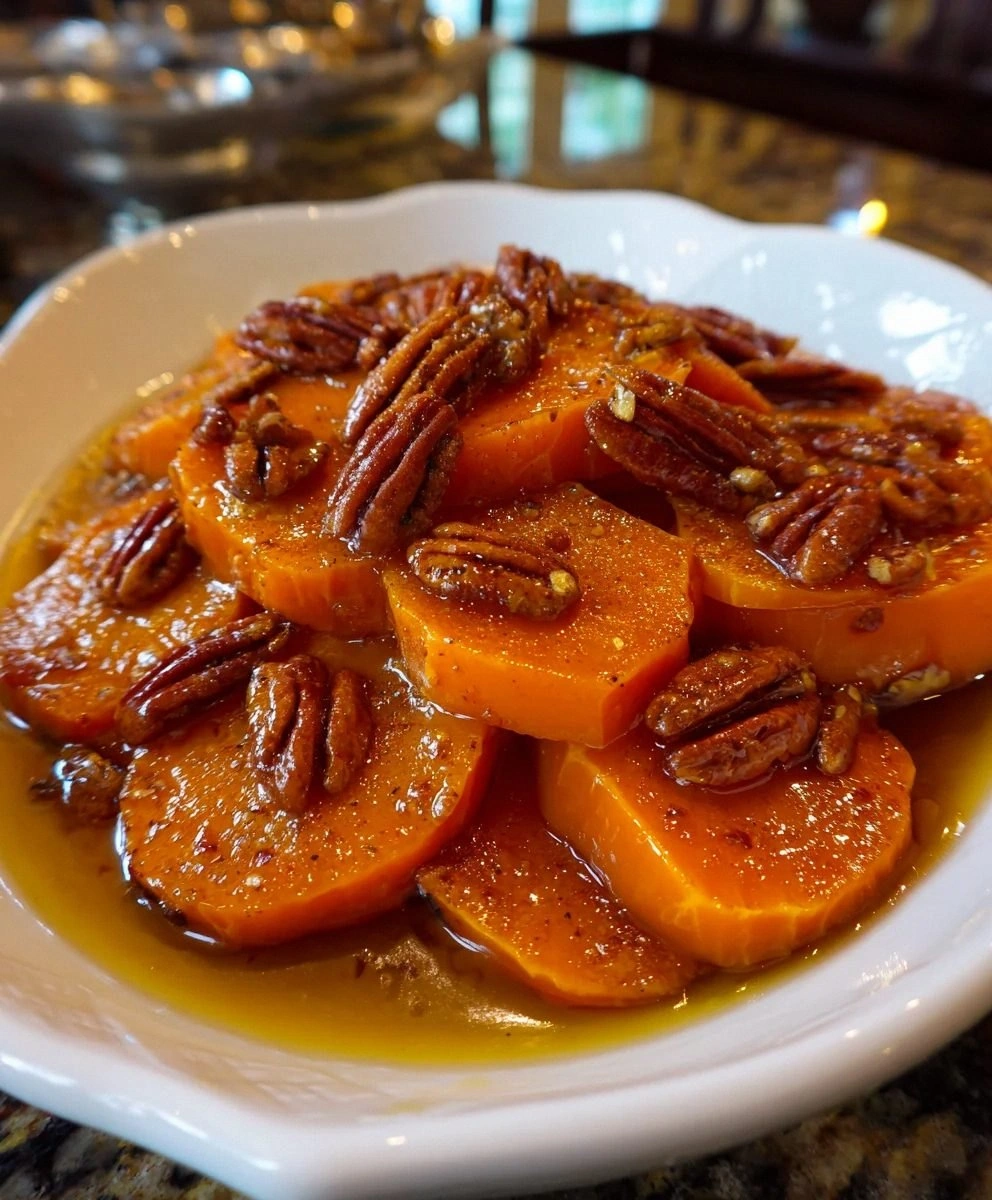
Picture this: It's a crisp autumn evening, and you're pulling a bubbling casserole dish from the oven. The aroma hits you first — that intoxicating blend of warm cinnamon, nutmeg, and caramelized sugar that makes your neighbors wonder what heaven you're cooking up. The yams are fork-tender but not mushy, each piece coated in a glossy glaze that's thick enough to cling lovingly but thin enough to let the natural sweetness shine through. And those pecans? They're not just scattered on top like an afterthought. No, we've transformed them into crispy, buttery nuggets of joy that'll have you "testing" them by the handful.
What makes this version different? Most recipes treat candied yams like a sugar delivery system, drowning the poor vegetables in a cloying syrup that could double as pancake topping. Instead, we're building layers of flavor that actually complement the yams rather than mask them. We're talking about a glaze that whispers rather than shouts, pecans that are toasted to the exact moment when their oils awaken, and a technique that ensures every bite delivers that perfect balance of sweet, savory, and nutty.
Stay with me here — this is worth it. By the time we're done, you'll have a side dish that steals the show from the turkey, converts yam-haters, and earns you the unofficial title of Holiday Hero. Trust me, I've seen it happen. Last year, my neighbor's teenage son, who previously thought vegetables were a government conspiracy, asked for seconds. Then thirds. Then the recipe. Let me walk you through every single step — by the end, you'll wonder how you ever made it any other way.
What Makes This Version Stand Out
Flavor Balance: Unlike those tooth-achingly sweet versions that taste like candy with vegetables, we strike the perfect harmony between natural yam sweetness and a measured brown sugar-maple glaze. The result is sophisticated enough for adults but still crowd-pleasing enough for kids who think vegetables are suspect.
Texture Contrast: While most recipes leave you with either mushy yams or rock-hard centers, our technique creates tender pieces that hold their shape, topped with pecans that maintain their crunch even after baking. That first bite gives you soft, creamy yams followed by the satisfying snap of perfectly toasted nuts.
Make-Ahead Magic: Here's the game-changer — you can prep this entire dish up to two days ahead. The glaze actually improves as it sits, penetrating the yams with deeper flavor. Just add the pecans before serving to keep them at peak crunch.
Ingredient Quality Focus: We use real maple syrup, not the fake stuff that tastes like a chemistry experiment. Combined with brown sugar, it creates a complex sweetness that brown sugar alone can't achieve. And those pecans? We're toasting them ourselves because the pre-toasted ones from the store are always stale.
Crowd Psychology: This dish disappears first at every gathering I've brought it to. There's something about the combination of familiar comfort food with elevated technique that makes people lose their manners. I've witnessed polite adults elbowing each other for the last serving.
Technique Over Tradition: Most recipes dump everything together and hope for the best. We build flavors in stages, creating a glaze that actually penetrates the yams rather than just sitting on top like a sugar blanket. The difference is night and day.
Alright, let's break down exactly what goes into this masterpiece...
Inside the Ingredient List
The Flavor Foundation
Yams are the obvious star here, but not all yams are created equal. Look for medium-sized ones that feel heavy for their size — these have the best sugar content and texture. Avoid the massive ones that look like they could double as weapons; they tend to be fibrous and bland. When selecting, give them a gentle squeeze. They should feel firm with smooth skin, no soft spots or wrinkles. These vibrant root vegetables bring natural sweetness and a creamy texture that forms the perfect canvas for our glaze.
The unsalted butter is crucial — and yes, it must be unsalted. I learned this the hard way when I used salted butter once and ended up with a dish that tasted like a salt lick had a fight with a candy store. The butter adds richness that carries all the other flavors, creating that luxurious mouthfeel that makes people close their eyes when they taste it. Don't even think about substituting margarine here; we're building flavor, not cutting corners.
The Sweetness Squad
Light brown sugar is our primary sweetener, but here's where we get clever. The molasses in brown sugar adds depth that white sugar simply can't achieve. However, we use light brown sugar specifically — dark brown would overpower the yams' natural sweetness. If you only have dark brown sugar, cut it with half white sugar to avoid that heavy molasses flavor that can make the dish taste like it has an identity crisis.
Pure maple syrup is the secret weapon that separates good candied yams from legendary ones. Not the corn syrup with maple flavoring — I'm talking about the real stuff that costs more but transforms everything it touches. It adds a complexity that makes people ask, "What is that amazing flavor?" without being able to put their finger on it. The maple syrup whispers rather than shouts, creating a background note that makes the brown sugar taste more sophisticated.
The Spice Cabinet
Ground cinnamon is non-negotiable, but here's what most recipes miss — the quality matters enormously. That jar that's been sitting in your cabinet since the Clinton administration? It's lost most of its volatile oils and will taste like dusty memories. Buy fresh cinnamon and you'll understand why this spice has been treasured for millennia. Just a teaspoon transforms the entire dish, lifting it from simple sweetness to something that tastes like autumn itself.
Ground nutmeg is where we get sneaky. Just a pinch — and I mean a real pinch, not a "more is better" situation — adds warmth and complexity that makes people feel cozy without knowing why. Too much and your dish tastes like potpourri. The key is using whole nutmeg and grating it fresh. Yes, it's an extra step, but the difference between pre-ground and fresh nutmeg is like the difference between instant coffee and a perfectly pulled espresso shot.
The Texture Champions
Kosher salt might seem odd in a sweet dish, but it's the difference between a one-dimensional sugar bomb and a complex flavor experience. The larger crystals distribute more evenly, and the lack of additives means pure salt flavor that enhances rather than competes. Just half a teaspoon balances all that sweetness and makes the other flavors pop like they've been waiting their whole lives for this moment.
Pecan halves are our crowning glory, but we need to talk about toasting. Raw pecans taste like disappointment — slightly bitter and oddly waxy. Toasting transforms them into nutty, buttery morsels that provide the perfect textural contrast to soft yams. We'll toast them ourselves because store-bought toasted nuts are always stale and taste like cardboard that's been sitting in a warehouse. The moment you smell that nutty aroma, you'll understand why this extra step is non-negotiable.
Vegetable oil is just for toasting the pecans, but even here we have options. Coconut oil adds a subtle tropical note that plays beautifully with the maple syrup. If you're feeling adventurous, try a mix of half coconut oil and half vegetable oil. Just keep the heat medium-low — nuts go from perfectly toasted to burnt in the time it takes to check your phone.
Everything's prepped? Good. Let's get into the real action...
The Method — Step by Step
- Start by peeling your yams and cutting them into 1-inch chunks. Here's the thing — too small and they'll turn to mush; too big and they won't cook through properly. One-inch pieces are the sweet spot. As you cut them, drop them into a bowl of cold water to prevent browning. This also removes excess starch, which helps them cook more evenly. Drain them well before cooking — wet yams will steam instead of caramelizing, and we're not making baby food here.
- Now we're going to par-cook these beauties. Bring a large pot of salted water to a boil — the water should taste like the ocean. Add your yam chunks and cook for exactly 8 minutes. Set a timer because this isn't the moment for guesswork. You want them just fork-tender but still holding their shape. Think al dente pasta, but for yams. Drain them immediately and spread on a baking sheet to stop the cooking. This step ensures they won't fall apart when we glaze them later.
- While your yams are cooling, let's toast those pecans. Heat a dry skillet over medium heat and add your pecan halves. Here's where you need to channel your inner zen master — don't walk away from the stove. Stir constantly for 3-4 minutes until they smell nutty and look slightly darker. The moment you smell that incredible aroma, they're done. Remove immediately to a plate to stop the cooking. Burned pecans taste like bitter regret, and there's no saving them once they cross that line.
- Time to build our glaze — and this is where the magic happens. In a saucepan over medium heat, melt your butter until it's just starting to foam. Add the brown sugar and whisk constantly until it looks like wet sand. This is the foundation of our glaze, and taking time here pays dividends. The sugar should be completely moistened by the butter but not yet dissolved. This creates a glaze that will cling to the yams rather than pooling at the bottom of the dish.
- Now for the liquid gold — pour in your maple syrup while whisking constantly. The mixture will bubble and thicken, creating a glossy caramel that makes you want to dive in face-first. Add your cinnamon, nutmeg, and salt. Keep whisking for another minute until everything is incorporated and smells like autumn in liquid form. The glaze should coat the back of a spoon but still be pourable. If it's too thick, add a tablespoon of water. Too thin? Let it bubble for another 30 seconds.
- Preheat your oven to 375°F. In a large bowl, gently toss your par-cooked yams with about two-thirds of the glaze. Be gentle — these babies are tender and we want them to maintain their shape. The glaze should coat every piece but not drown them. Think of it as giving them a light jacket rather than a heavy coat. Save the remaining glaze for later; we're going to use it to create that gorgeous shiny finish.
- Transfer the glazed yams to a buttered 9x13 baking dish. Arrange them in a single layer — overcrowding leads to steaming, and we want those edges to caramelize. Slide the dish into your preheated oven and bake for 20 minutes. This is where the transformation happens. The glaze will bubble and thicken, creating a sticky coating while the edges of the yams start to caramelize and develop those delicious browned bits.
- After 20 minutes, pull the dish out and drizzle the remaining glaze over the top. This creates layers of flavor — the first glaze penetrates and flavors the yams, while this second application creates that restaurant-quality shine. Sprinkle your toasted pecans evenly over the top, pressing them gently into the glaze so they'll stay put. Return to the oven for another 10-12 minutes until the pecans are fragrant and the glaze is bubbling around the edges.
- The final step is crucial — let it rest for 5 minutes before serving. I know, I know, everything smells incredible and you want to dig in immediately. But those few minutes allow the glaze to set slightly, ensuring it coats the yams rather than running all over the plate. Plus, molten sugar is basically lava at this point, and nobody wants to burn their tongue on the best part of the meal. Serve warm and watch as people who claimed they were "too full for dessert" suddenly find room.
That's it — you did it. But hold on, I've got a few more tricks that'll take this to another level...
Insider Tricks for Flawless Results
The Temperature Rule Nobody Follows
Here's the thing about candied yams — temperature control is everything. Too hot and your glaze burns before the yams are heated through. Too cool and you end up with a watery, separated mess. Your oven thermometer is lying to you, by the way. Most home ovens are off by 25-50 degrees, which explains why your dishes sometimes take forever or burn before they're supposed to. Invest in an oven thermometer and you'll never look back. For this recipe, we want a true 375°F, not what your oven claims is 375°F.
Another temperature trick: let your yams come to room temperature before glazing. Cold yams straight from the fridge will seize the glaze, creating a grainy texture that no amount of baking can fix. If you're prepping ahead (which you absolutely should), take them out 30 minutes before they go in the oven. This small step ensures the glaze adheres properly and creates that glossy finish that makes people think you went to culinary school.
Why Your Nose Knows Best
Throughout this recipe, your nose is your most reliable tool. When toasting pecans, the moment you smell that nutty aroma, they're done — remove them immediately. When the glaze is cooking, it should smell like caramel and spices, not burnt sugar. If you catch a whiff of anything acrid or sharp, you've gone too far and need to start over. I once ignored this advice and served candied yams that tasted like they were glazed with disappointment.
The same principle applies when the dish is baking. You should smell cinnamon, maple, and butter wafting through your kitchen. If you smell burning, check immediately — your glaze might be overcooking around the edges. This is where that 5-minute rest period becomes crucial. The residual heat continues cooking the glaze slightly, so pulling it out when it looks almost done prevents that last-minute burning that ruins so many dishes.
The 5-Minute Rest That Changes Everything
I cannot stress this enough — those five minutes of resting time are not optional. They're not a suggestion. They're the difference between a good dish and a dish that makes people close their eyes when they taste it. During this rest, several things happen: the glaze thickens and becomes glossy, the flavors meld and deepen, and the temperature drops to that perfect "warm but won't burn your tongue" level. Skip this step and you end up with runny glaze and frustrated diners who burn their mouths and can't taste anything for the rest of the meal.
Use this time wisely. Call everyone to the table, pour some wine, finish up any last-minute dishes. The candied yams will be at their absolute peak when you serve them. Plus, there's something magical about that moment when you place the dish on the table and everyone gets quiet for just a second, taking in the gorgeous sight and incredible aroma. That pause builds anticipation and makes that first bite even more memorable.
Creative Twists and Variations
This recipe is a playground. Here are some of my favorite ways to switch things up:
The Bourbon Bonfire
Add two tablespoons of good bourbon to the glaze after you add the maple syrup. The alcohol cooks off, leaving behind a smoky depth that pairs beautifully with the sweet potatoes and makes this dish taste like it came from a fancy restaurant. Use something you'd actually drink — cheap bourbon tastes like regret. The bourbon adds vanilla and caramel notes that complement the maple syrup perfectly. This version is especially popular with adults who appreciate the complexity.
The Tropical Vacation
Replace half the maple syrup with coconut cream and add a teaspoon of lime zest to the glaze. Top with toasted coconut flakes along with the pecans. Suddenly your traditional Thanksgiving side dish tastes like a Caribbean vacation. The coconut adds richness while the lime zest brightens everything up, creating a version that works beautifully with ham or pork dishes. Kids love this version because it tastes like dessert.
The Savory Rebel
Add a tablespoon of fresh rosemary and a half teaspoon of black pepper to the glaze. This creates a sweet-savory combination that pairs incredibly well with roasted meats. The herbaceous notes from the rosemary cut through the sweetness, while the pepper adds just enough bite to make people wonder what your secret is. This version converts people who claim they "don't like sweet vegetables" — the savory elements balance everything perfectly.
The Nutty Professor
Mix up the nuts — use half pecans and half walnuts or even hazelnuts. Each nut brings different oils and flavors to the party. Walnuts add a slight bitterness that balances the sweet glaze, while hazelnuts bring an almost chocolate-like depth. Toast each type separately since they have different oil contents and cooking times. This version adds visual interest and gives people something to talk about besides politics at holiday dinners.
The Spicy Surprise
Add a quarter teaspoon of cayenne pepper and a tablespoon of grated fresh ginger to the glaze. The heat is subtle — just enough to make people go "hmm, what's that?" without overwhelming the dish. The ginger adds brightness and warmth, while the cayenne creates a gentle burn that builds slowly. This version is addictive — people keep coming back for "just one more bite" until the dish is empty.
The Orange Dreamsicle
Add the zest of one orange and a teaspoon of vanilla extract to the glaze. The orange oil adds a bright, citrusy note that makes the entire dish taste fresher and more complex. The vanilla enhances the natural sweetness of the yams while adding a floral note that makes this taste like a sophisticated creamsicle. This version is particularly good for potlucks — it stands out from all the traditional versions while still feeling familiar.
Storing and Bringing It Back to Life
Fridge Storage
Store leftover candied yams in an airtight container in the refrigerator for up to 4 days. The key is to let them cool completely before refrigerating — hot yams in a sealed container create condensation that makes the pecans soggy and sad. If you know you'll have leftovers, consider storing the pecans separately and adding them when you reheat. The glaze will thicken considerably in the fridge, almost like candy. This is normal and actually makes them easier to reheat without becoming mushy.
Freezer Friendly
These freeze beautifully for up to 2 months, but with a caveat: freeze them without the pecans. Nuts don't freeze well — they become rubbery and lose their crunch. Freeze the yams and glaze in a freezer-safe container, leaving about an inch of space at the top for expansion. When you're ready to serve, thaw overnight in the refrigerator, then reheat with fresh toasted pecans on top. The texture after freezing is remarkably similar to fresh, making this perfect for meal prep or getting ahead on holiday cooking.
Best Reheating Method
The microwave works in a pinch, but the oven is your friend here. Cover the dish with foil and reheat at 325°F for about 15 minutes, removing the foil for the last 5 minutes to re-crisp the pecans. Add a tiny splash of water before reheating — it creates steam that brings back the glossy glaze without drying out the yams. If you're in a hurry, the microwave works: use 50% power in 30-second bursts, stirring between each burst. But honestly, these are almost better the next day cold from the fridge — the flavors have melded into something magical.