Love this? Pin it for later! 📌
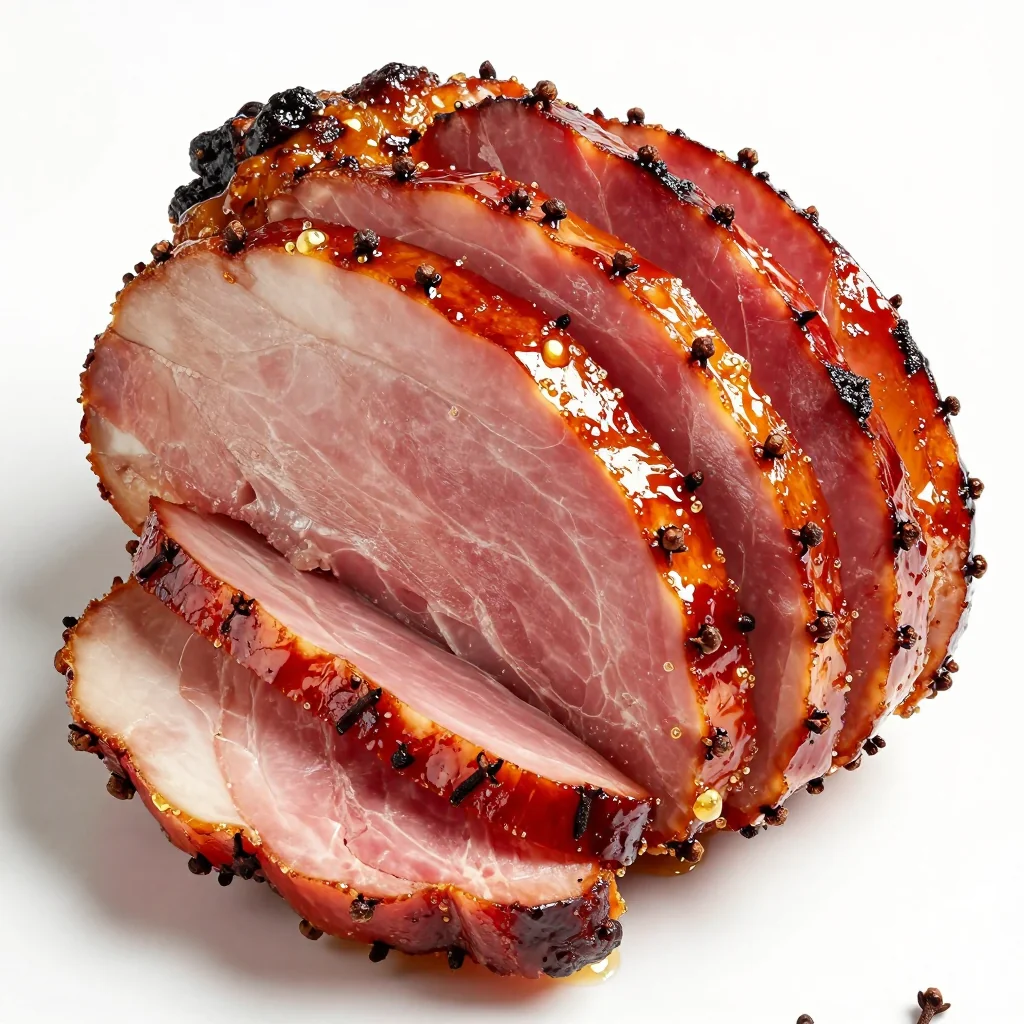
There’s a moment—usually right after the table is set, the candles are lit, and the wine has been poured—when the honey-glazed ham glides into the dining room on its platter, glistening like a ruby under twinkle lights. In my family that moment is met with a collective, involuntary “ooooh.” It happens every single year, whether we’re hosting seventeen people for Christmas or keeping it intimate for Easter. The first time I attempted a holiday ham I was twenty-three, convinced I’d ruin a $60 chunk of meat. Instead, this easy honey glaze—made with pantry staples and zero fuss—turned me into the relative who is “in charge of the ham forever.” Fifteen years later I’m still asked for the recipe at every gathering, and I’m delighted to share the no-fail, no-stress version that guarantees you’ll get that same “ooooh” when you walk through the door.
Why This Recipe Works
- Low-maintenance oven schedule: 15 minutes of hands-on time, then the glaze does the work while you mingle.
- Balanced sweetness: Honey plus a kiss of brown mustard keeps the glaze from tasting like candy.
- Built-in baster: Pineapple juice in the roasting pan self-bastes the ham every 20 minutes.
- Crispy-but-juicy edges: A final 10-minute broil caramelizes the glaze without drying the interior.
- Adaptable size: Works for half hams (4–5 lb) or whole hams (8–10 lb) with zero math headaches.
- Make-ahead friendly: Glaze can be prepped up to a week early; ham can be roasted, sliced, and reheated in its juices.
- Leftover magic: transforms into sandwiches, omelets, and the best split-pea soup of your life.
Ingredients You'll Need
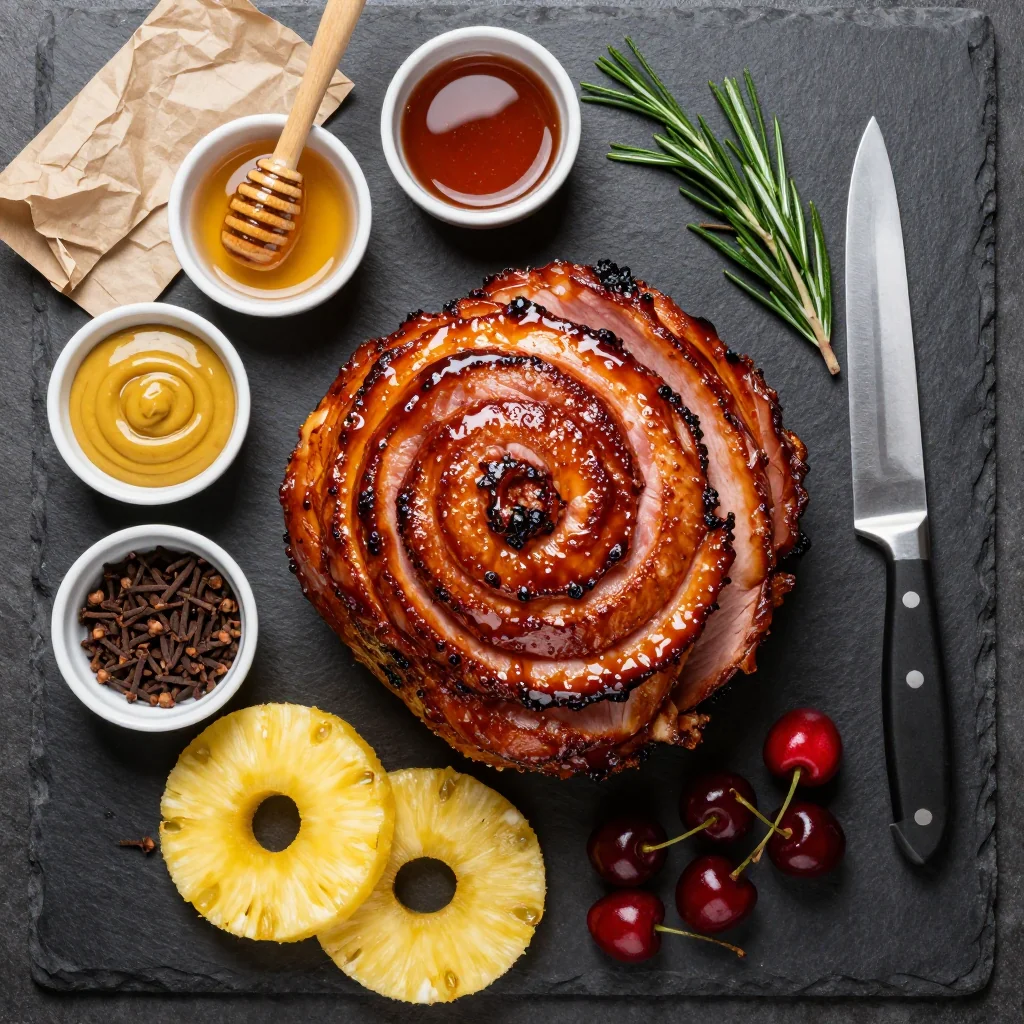
A holiday ham starts at the store. Look for a bone-in, half or whole city ham (wet-cured, sometimes labeled “water added”) rather than country ham (salt-cured and intensely salty). Bone-in guarantees moister meat and doubles as flavor-builder for post-holiday soup. The shank end is dramatic and easy to carve; the butt end is meatier but has a Y-shaped bone—either works.
Honey is the star. I reach for a mid-range wildflower honey; anything darker (buckwheat) can overpower, while ultra-mild clover gets lost. If crystallized, gently warm the jar in a bowl of hot tap water—no microwaving or you’ll cook away the floral notes.
Brown sugar adds molasses depth; light or dark both work. Dijon supplies sharp balance, but stone-ground is a rustic swap. Unsalted butter gives silkiness; salted is fine—just reduce the added salt. Pineapple juice tenderizes and perfumes; apple cider is an autumnal substitute. Whole cloves are optional but make the kitchen smell like December.
If your ham arrives vacuum-sealed, give it a quick rinse to remove surface brine; if it’s from the butcher counter, you can skip this. Either way, pat very dry so the glaze can cling.
How to Make Easy Honey Glazed Ham for a Holiday Meal
Position & Preheat
Remove one oven rack and place the remaining rack in the lower-third position; this prevents the top of the ham from scorching. Preheat to 325 °F (165 °C). Line a heavy roasting pan with two long sheets of foil arranged in a cross—handles that will make lifting the ham effortless later.
Score & Clove
Pat ham dry. Using a sharp paring knife, score a 1-inch-wide diamond pattern across the fat cap, cutting only ¼ inch deep—just enough to expose the meat so glaze can seep in. If using cloves, press one into the center of each diamond; they’ll perfume the glaze and look picture-perfect.
Create Steam Bath
Pour 2 cups pineapple juice (or apple cider) into the bottom of the pan. Tent the ham loosely with foil—shiny side down to deflect heat—so the top steams and stays moist. Slide onto the lower rack and bake 12 minutes per pound (about 1 h 30 min for a 7-lb half ham).
Start the Glaze
While the ham bakes, combine ¾ cup honey, ½ cup packed brown sugar, 3 Tbsp melted butter, 2 Tbsp Dijon, 1 tsp ground cinnamon, ½ tsp smoked paprika, and a pinch of kosher salt in a small saucepan. Warm over medium heat just until the sugar dissolves and the mixture is silky—about 3 minutes. Remove from heat; glaze will thicken slightly as it cools.
First Glaze Layer
After the initial steam roast, remove ham from oven and increase temperature to 375 °F (190 °C). Peel back the foil, letting it nest around the sides like a silver nest. Brush one-third of the glaze over the entire ham, nudging it into the score marks so it can drip down the sides.
Baste & Build
Return ham to oven uncovered. Every 15 minutes, brush on more glaze—using the juices that collect in the pan to thin the glaze if needed. The sugars will bubble and slowly caramelize, deepening to a glossy amber. Reserve the final third of glaze for the broil.
Check Temperature
Insert an instant-read thermometer into the thickest part, away from bone. City hams are pre-cooked, so you’re heating to 140 °F (60 °C) for optimal juiciness. If under, continue glazing every 10 minutes until target temp is reached.
Caramelizing Broil
Switch oven to broil. Brush on remaining glaze, adding a drizzle of honey for extra shine. Broil 3–5 minutes, rotating pan halfway, until the surface is blistered and lava-like. Watch closely—sugar turns from bronze to black in seconds.
Rest & Carve
Transfer ham to a cutting board and tent loosely with the same foil. Rest 20 minutes so juices redistribute. Cut in thin slices perpendicular to the bone, or remove the bone entirely for easier serving. Ladle some of the fragrant pan juices over the slices for extra moisture.
Serve in Style
Arrange slices on a platter, overlapping like shingles. Drizzle with a spoonful of warm glaze and garnish with fresh rosemary sprigs and orange wheels for color. Serve extra glaze in a gravy boat for guests who like it extra sweet.
Expert Tips
Tip 1: Use a Thermometer, Not a Timer
City hams vary in moisture content; pull at 140 °F and you’ll never risk dryness.
Tip 2: Double the Glaze
Extra glaze reheated with a splash of juice makes an incredible drizzle for roasted carrots or Brussels sprouts.
Tip 3: Foil Handles
Leave long foil tails so you can lift the ham out for carving without awkward tong-sliding disasters.
Tip 4: Mini Baster
No baster? Use a small ladle to scoop the pineapple juices over the ham each time you glaze.
Tip 5: Slice Smart
Slice only what you need; a whole unsliced ham stays moister when stored.
Tip 6: Smoky Twist
Add ¼ tsp liquid smoke to the glaze for subtle campfire depth without overpowering the honey.
Variations to Try
- ▸ Maple-Orange: Swap half the honey for pure maple syrup and add 1 tsp orange zest + ¼ cup juice.
- ▸ Spicy Bourbon: Replace 2 Tbsp pineapple juice with bourbon and whisk ½ tsp cayenne into glaze.
- ▸ Ginger-Peach: Stir in 2 Tbsp peach preserves and 1 tsp grated fresh ginger for Southern flair.
- ▸ Sugar-Free: Use brown-sugar substitute and sugar-free honey; monitor closely—sugar alcohols burn faster.
- ▸ Cranberry Holiday: Whisk 3 Tbsp cranberry relish into final glaze for ruby color and tang.
- ▸ Garlic-Herb: Reduce honey to ½ cup, add 1 tsp thyme and 1 minced garlic clove for a savory angle.
Storage Tips
Refrigerate: Cool ham to room temperature (no more than 2 hours). Wrap tightly in foil or place slices in shallow airtight containers; refrigerate up to 5 days.
Freeze: Slice first for convenience. Layer slices with parchment, seal in freezer bags, press out air, and freeze up to 2 months. Thaw overnight in refrigerator.
Reheat: Place slices in a baking dish, add ¼ cup broth or pineapple juice, cover with foil, and warm at 275 °F until just heated through—about 10 min for slices; 20 min for a large chunk.
Make-Ahead Whole Ham: Roast, cool, and slice up to 3 days early. Store slices in their juices; reheat covered at 300 °F until 140 °F. The flavor actually improves as the glaze mingles with the meat.
Frequently Asked Questions
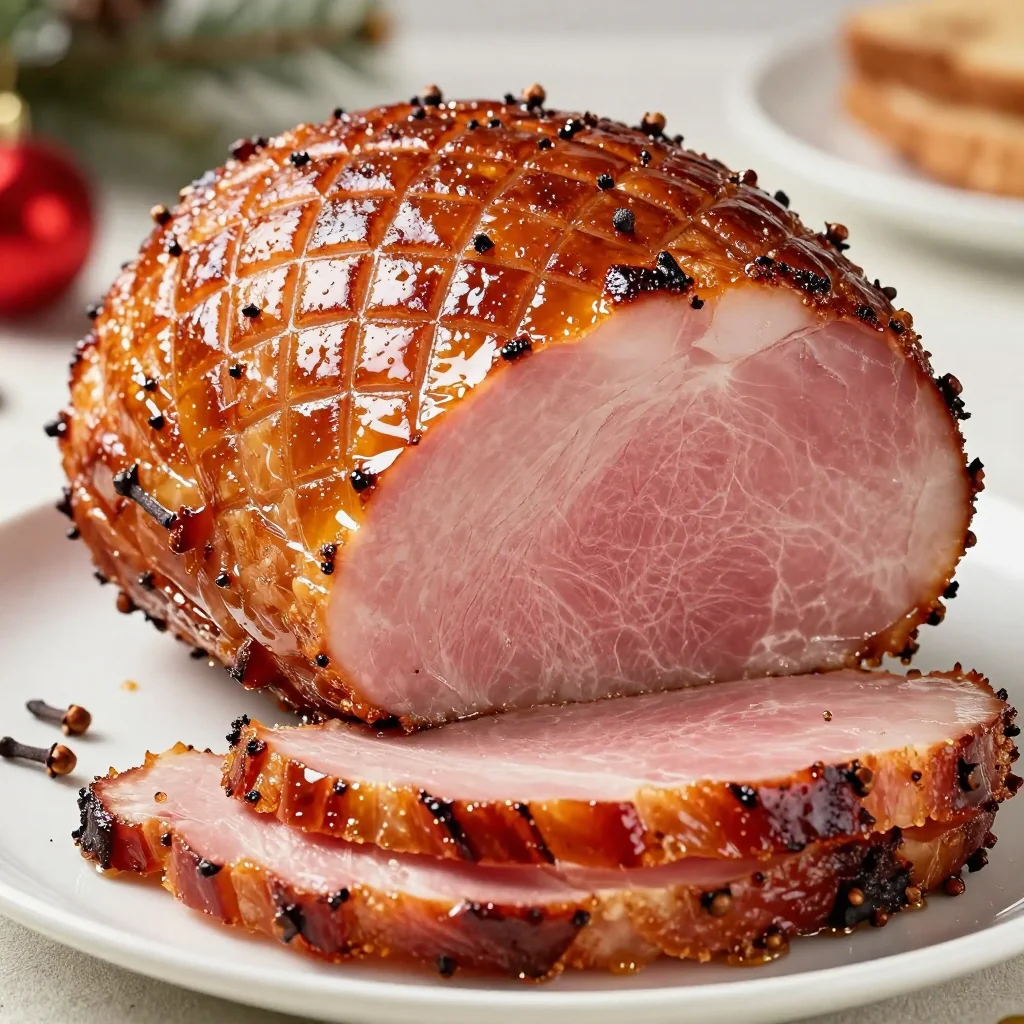
Easy Honey Glazed Ham for a Holiday Meal
Ingredients
Instructions
- Preheat: Adjust oven rack to lower-third; preheat to 325 °F. Line roasting pan with crossed foil strips.
- Prep Ham: Rinse and pat dry. Score fat in 1-inch diamonds; stud with cloves if desired.
- Steam: Pour pineapple juice into pan. Tent ham with foil; bake 12 min per pound.
- Make Glaze: Combine honey, brown sugar, butter, Dijon, cinnamon, paprika, and salt in saucepan; warm until smooth.
- Glaze: Increase oven to 375 °F. Brush ham with one-third glaze; roast uncovered, brushing every 15 min.
- Broil: Broil 3–5 min for caramel crust. Rest 20 min before carving.
Recipe Notes
Ham is done at 140 °F internal temperature. Leftovers keep 5 days refrigerated or 2 months frozen.