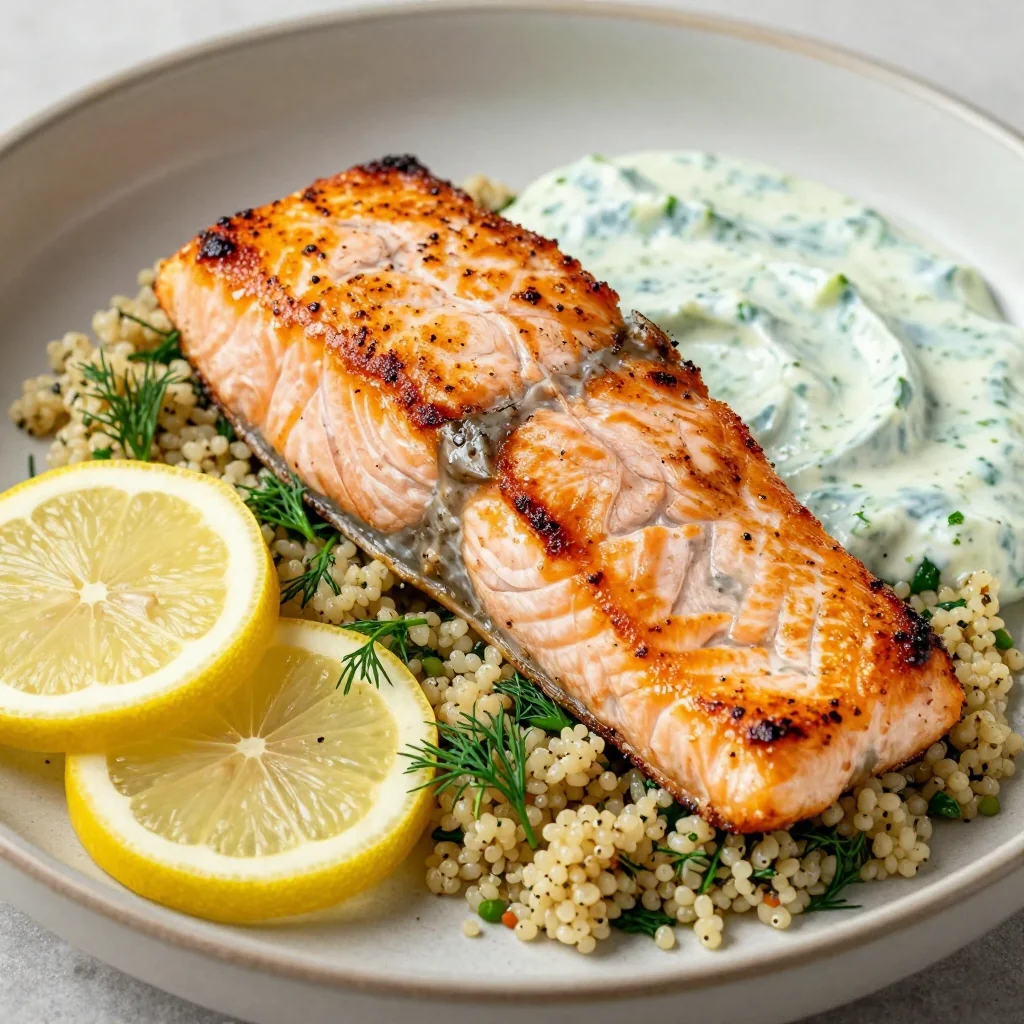
Love this? Pin it for later! 📌
Flaky, citrus-kissed salmon in under 20 minutes, paired with a cool, creamy cucumber-yogurt sauce that tastes like summer in a bowl.
My first apartment had a galley kitchen so narrow the fridge door couldn’t open all the way without hitting the opposite wall. Weeknight dinners were a rotation of scrambled eggs, boxed mac, and whatever I could microwave without setting off the temperamental smoke alarm. Then one Tuesday I splurged on a single salmon fillet because the fish counter chalkboard promised “wild-caught and fresh off the plane from Alaska.” I pan-seared it with nothing but butter and desperation, and—brace yourself—it stuck to the skillet like cement. The outside was charcoal, the inside sushi. I ate it anyway, standing over the sink, wondering how people managed to cook fish without a culinary degree.
Fast-forward a decade and I still don’t have that degree, but I do have a fool-proof method that turns out restaurant-quality salmon every single time—no sink-standing required. This Quick Lemon Dill Salmon with Cucumber Yogurt Sauce is the recipe I wish I’d had in that tiny kitchen: lightning-fast, pantry-friendly, and crowned with a sauce so refreshing you’ll spoon the leftovers on everything from pita chips to tomorrow’s sandwich. It’s elegant enough for company (I’ve served it to my fussiest in-laws) yet speedy enough for a chaotic Wednesday when the kids have soccer, piano, and an urgent need for help with a diorama due tomorrow.
Below you’ll find the long-form version packed with every tip I’ve learned from ten years of weekly salmon nights—plus the science behind why a hot pan + skin-side-down equals crispy perfection. Scroll all the way to the bottom for the printable recipe card if you’re in a rush, but trust me: linger here for the pro tricks and you’ll never chew through another dry fillet again.
Why This Recipe Works
- One-pan wonder: The entire dish—from salmon sear to yogurt sauce—uses a single skillet and one small bowl. Fewer dishes = more Netflix.
- Ready in 18 minutes flat: While the salmon cooks, you whisk the sauce. Dinner is on the table faster than delivery.
- Restaurant-level skin: A pre-heated stainless or cast-iron skillet + medium-high heat renders the fat and leaves the skin shatter-crisp (if you’re a skin-eater) or peels off effortlessly (if you’re not).
- Double-duty sauce: Greek yogurt provides protein and probiotics; cucumber keeps it light and dip-able for veggies tomorrow.
- Scalable: Halve it for a solo lunch or multiply for a bridal-shower brunch.
- Meal-prep superstar: The yogurt sauce improves overnight; salmon flaked into salads stays juicy for 48 hours.
- Budget-friendly: Farm-raised salmon works beautifully; the vibrant sauce makes even frozen fillets taste luxurious.
Ingredients You'll Need
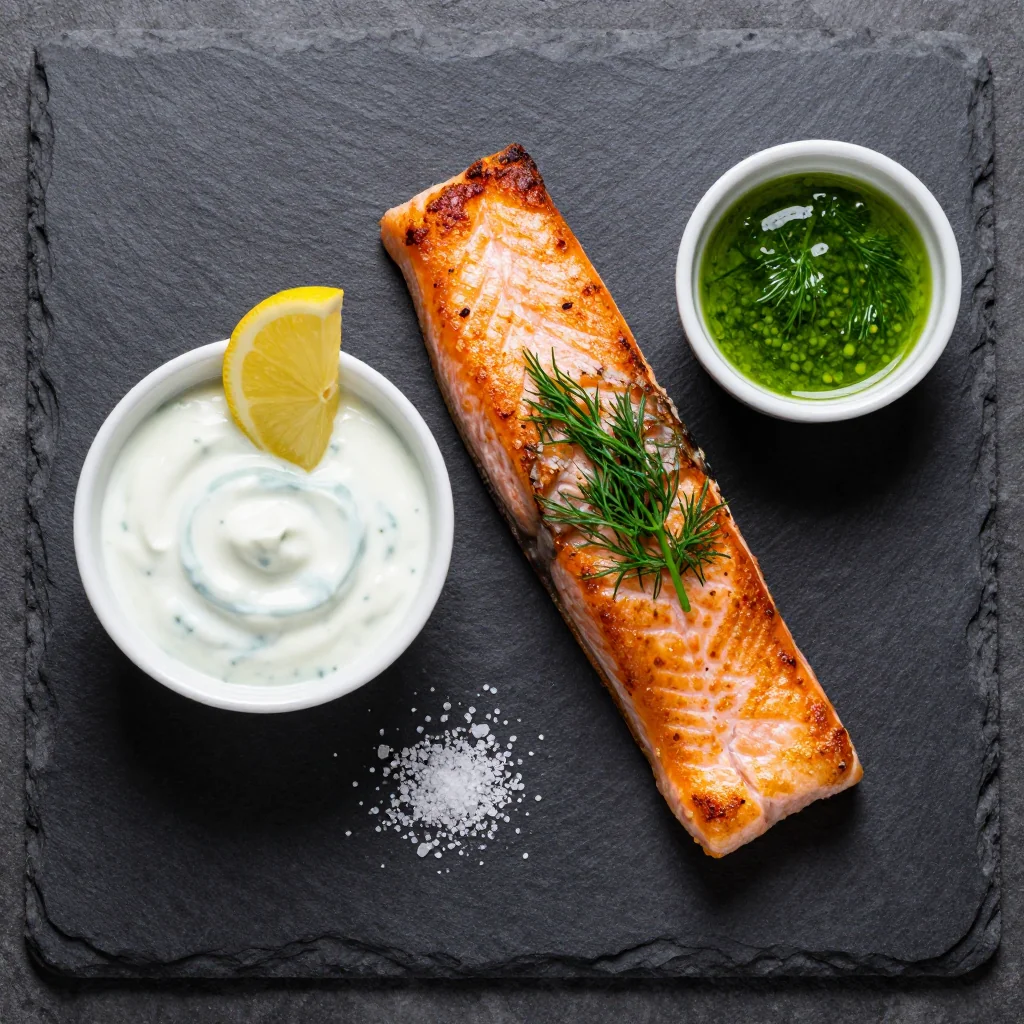
Salmon – Look for fillets that are uniform in thickness (about 1 inch) so they cook evenly. Wild-caught Coho or King has the richest flavor, but responsibly farmed Atlantic is perfectly acceptable and usually half the price. Avoid anything with a fishy smell or gaps between muscle fibers—those are signs of age. If your grocery only offers 8-ounce center-cut portions, buy two and split them horizontally for faster cooking.
Lemon – One large lemon gives you both zest and juice. Organic matters here since you’ll be zesting. Pro tip: roll the lemon on the counter under your palm for 10 seconds before cutting to burst the cells and double the juice yield.
Dill – Fresh dill fronds have a grassy sweetness that dried can’t replicate. If you must substitute, use 1 teaspoon dried dill plus 1 teaspoon dried parsley for color. Buy a small bunch; leftover stems can be frozen in ice-cube trays with olive oil for future sauté projects.
Olive oil – A tablespoon of everyday extra-virgin is all you need to keep the salmon from sticking. Save the fancy finishing oil for salads.
Greek yogurt – Full-fat (5 %) yields the silkiest sauce, but 2 % works if you’re counting macros. Avoid non-fat—it tastes chalky and breaks when mixed with acidic lemon.
English cucumber – The long, plastic-wrapped variety has fewer seeds and thinner skin, so no peeling required. If you only have a regular cuke, peel and scoop out the seeds with a spoon to prevent watery sauce.
Garlic – One small clove, micro-planed so it dissolves into the yogurt without harsh bites.
Salt & pepper – Fine sea salt for seasoning the flesh, flaky salt for finishing. Fresh-cracked pepper on the sauce only—black specks on salmon skin can taste bitter when seared.
How to Make Quick Lemon Dill Salmon with Cucumber Yogurt Sauce
Pat, pin-bone, and dry-brine
Remove salmon from packaging and pat very dry with paper towels. Run your fingers along the surface to locate pin bones; tug them out with tweezers. Season flesh side with ½ teaspoon sea salt and let rest 10 minutes. The salt draws out surface moisture, guaranteeing a lacquer-crisp crust.
Grate the cucumber
Using the large holes of a box grater, shred half an English cucumber directly into a clean kitchen towel. Gather the ends and twist into a tight bundle; squeeze over the sink until no more liquid drips. You want bone-dry shreds so the sauce stays thick.
Whisk the yogurt base
In a small bowl combine ¾ cup Greek yogurt, 1 tablespoon fresh lemon juice, 1 teaspoon lemon zest, 1 tablespoon minced dill, 1 small grated garlic clove, and the squeezed cucumber. Season with ¼ teaspoon salt and several grinds of pepper. Cover and chill while you cook the fish; the flavors meld and improve.
Preheat the skillet
Place a stainless or cast-iron skillet over medium-high heat for 2 minutes. You want the pan screaming hot so the skin instantly contracts and releases. Drop 1 tablespoon olive oil and swirl; when the surface shimmers and the first wisp of smoke appears, you’re ready.
Lay it down—then leave it alone
Place salmon skin-side up (flesh-side down) in the center of the pan. Press gently with a spatula for 10 seconds to ensure full contact. Do not nudge, peek, or jiggle. After 3½ minutes the flesh will develop a golden crust and release effortlessly.
Flip once and finish
Use a thin fish spatula to flip the fillet; the skin should now be facing down. Reduce heat to medium and cook 2½–3 minutes more for medium (130 °F). For well-done add an extra 60 seconds. Transfer to a warm plate and rest 3 minutes; residual heat nudges the center to buttery perfection.
Finish with flair
Just before serving, squeeze the remaining lemon half over the salmon and sprinkle with fresh dill. Plate a generous dollop of cucumber yogurt sauce alongside or underneath for a bistro-style swoosh.
Expert Tips
Use an instant-read thermometer
Salmon turns from translucent to opaque at 125 °F (medium-rare) and flakes at 145 °F (well-done). Insert the probe through the side into the thickest portion for an accurate read.
Start with cold fish
Contrary to steak doctrine, salmon sears better when it goes from fridge to pan. Room-temperature fillets can overcook on the exterior before the center hits target temp.
De-glaze for a bonus sauce
After you remove the salmon, pour ¼ cup white wine or broth into the hot skillet and scrape up the browned bits. Swirl in a knob of butter for a 30-second pan sauce.
Freeze portions flat
Stock up when salmon is on sale; place individual fillets in zip bags, press out air, and freeze on a sheet pan so they stay flat. Thaw overnight in the fridge for best texture.
Crisp skin hack
After flipping, place a second smaller skillet or cake tin on top of the fish; the gentle weight keeps the skin flat against the surface and produces ultra-crispy results.
Brighten leftovers
Revive refrigerated salmon by flaking it cold over a salad, then drizzle with extra lemon and a glug of good olive oil. Re-warming cooked fish often dries it out.
Variations to Try
- Mediterranean: Swap dill for oregano, add ¼ cup chopped kalamata olives and sun-dried tomatoes to the yogurt.
- Asian twist: Replace lemon with lime, stir 1 teaspoon soy sauce and ½ teaspoon sesame oil into the yogurt, and top with toasted sesame seeds.
- Spicy kick: Whisk 1 teaspoon sriracha into the sauce and garnish with thinly sliced Fresno chile.
- Dairy-free: Use coconut yogurt and add 1 tablespoon finely minced mint to balance coconut’s sweetness.
- Herb garden: No dill? Try tarragon, chives, or parsley—just keep the 1 tablespoon fresh herb ratio for brightness.
- Sheet-pan meal: Surround salmon with asparagus spears tossed in olive oil, salt, and pepper; roast everything at 425 °F for 10–12 minutes instead of pan-searing.
Storage Tips
Refrigerate: Cool salmon completely, then store in an airtight container up to 3 days. Keep the yogurt sauce in a separate jar; it lasts 4 days and gets thicker as moisture wicks out—thin with a splash of water or milk before serving.
Freeze: Wrap each cooked fillet in parchment, then foil, and freeze up to 2 months. Thaw overnight in the fridge and enjoy cold or gently warmed in a covered skillet with a splash of broth. Do not freeze the cucumber yogurt sauce; the veggies become limp and watery upon thawing.
Meal-prep: Portion flaked salmon into grain bowls with farro, cherry tomatoes, and a scoop of yogurt sauce; refrigerate up to 48 hours. The acid in the sauce keeps the salmon moist.
Frequently Asked Questions
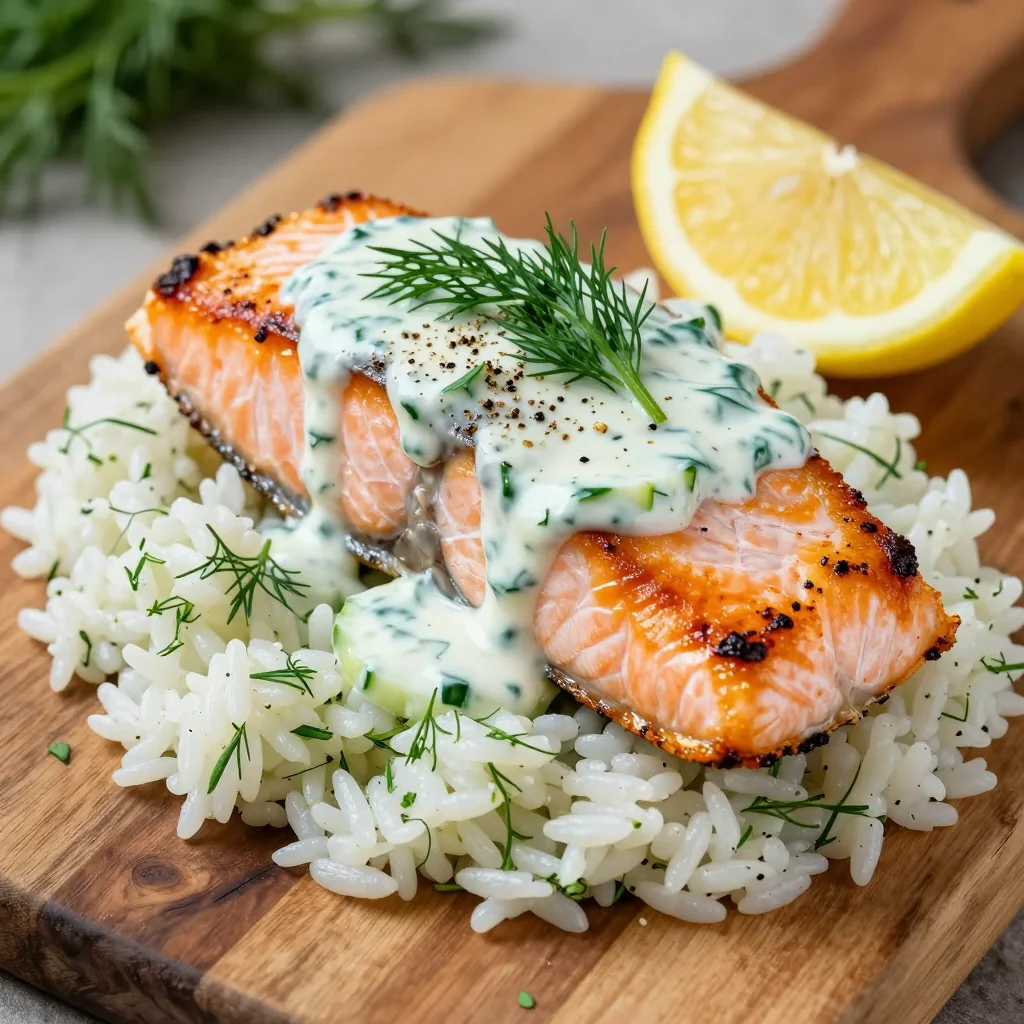
Quick Lemon Dill Salmon with Cucumber Yogurt Sauce
Ingredients
Instructions
- Pat & Season: Dry salmon, remove pin bones, salt flesh side. Rest 10 min.
- Make Sauce: Stir yogurt, cucumber, 1 Tbsp lemon juice, 1 tsp zest, dill, garlic, salt & pepper. Chill.
- Heat Skillet: Medium-high heat 2 min, add oil until shimmering.
- Sear: Place salmon flesh-side down, press 10 sec, cook 3½ min undisturbed.
- Flip: Turn, cook skin-side down 2½–3 min (130 °F for medium).
- Rest & Serve: Rest 3 min, squeeze lemon, sprinkle dill. Serve with yogurt sauce.
Recipe Notes
For crispy skin, ensure the fillet is bone-dry and the pan is hot before adding oil. Do not overcrowd; cook in two batches if necessary.