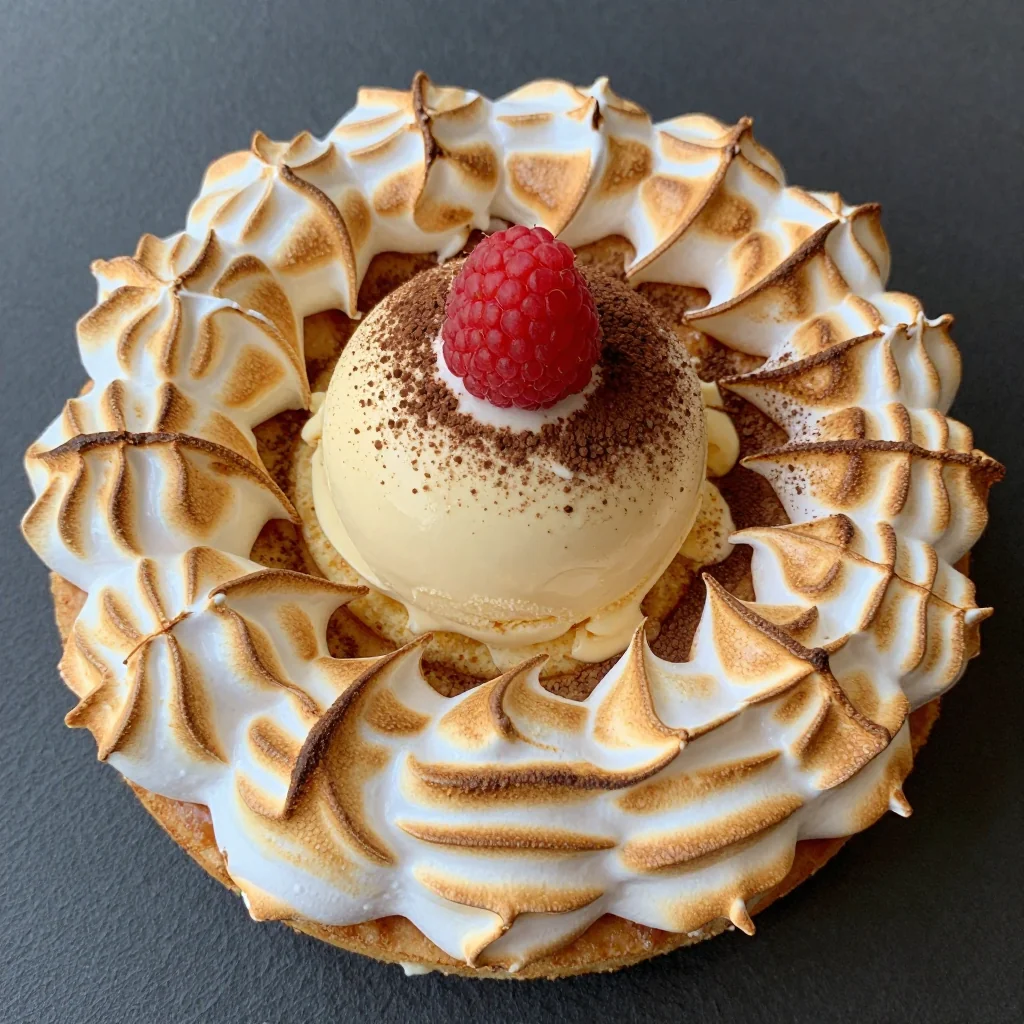
Love this? Pin it for later! 📌
I still remember the first time I watched a Baked Alaska glide into the dining room at my grandmother’s 70th birthday. The lights dimmed, the chatter hushed, and out came this towering dome of toasted meringue, the candlelight flickering against its golden peaks like a miniature mountain range. When the server cut through the crisp shell to reveal the still-frozen heart of vanilla ice-cream and tender sponge, the collective gasp around the table was electric. That was the moment I understood that dessert could be theatre.
Fast-forward fifteen years and I’m still chasing that same magic in my own kitchen. After dozens of trials (and more than a few melted disasters) I’ve landed on a recipe that is every bit as dramatic, yet surprisingly manageable for the home cook. The secret is in the timing: a sturdy sponge that won’t go soggy, ice-cream that’s rock-solid before assembly, and a Swiss meringue that toasts in minutes under a broiler so the ice-cream never gets a chance to weep. Whether you’re planning a holiday centerpiece, a milestone birthday, or simply want to see your guests’ jaws drop, this Showstopper Baked Alaska with Vanilla Ice Cream is the ultimate culinary mic-drop.
Why This Recipe Works
- Build-ahead friendly: each component can be prepped up to a week in advance, so you simply assemble and torch the day of serving.
- Swiss meringue armor: heating the sugar and whites together creates a glossy, stable cloud that insulates the ice-cream like a down jacket.
- Hot-knife slicing: a quick dip in hot water gives picture-perfect slices with zero meringue drag.
- Flexible flavor canvas: swap the vanilla for coffee, strawberry, or dairy-free coconut ice-cream without changing the method.
- Broiler-safe technique: no specialty torch required; your oven’s top element browns the peaks in under two minutes.
- Built-in portion guide: the 8-inch dome feeds 10–12, but you can scale down to half-spheres for intimate dinners.
Ingredients You'll Need
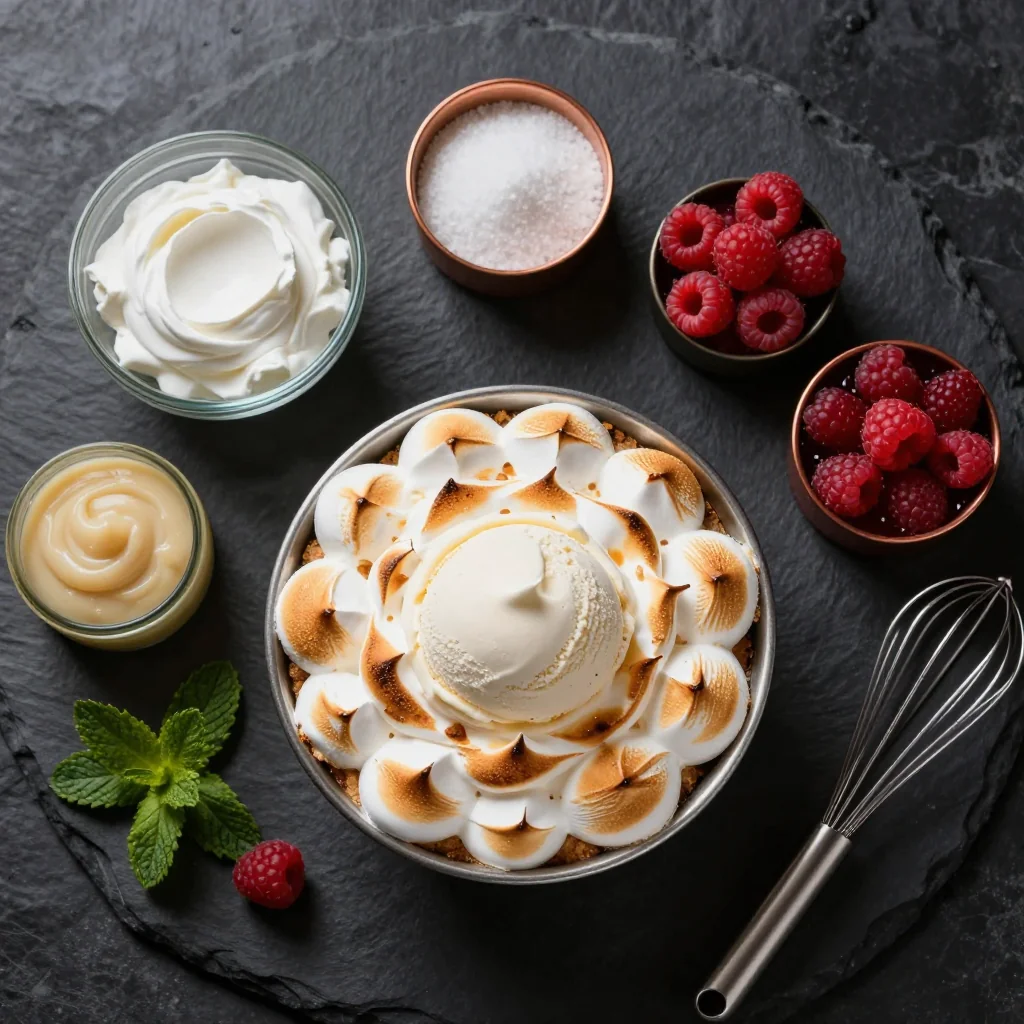
Great Baked Alaska starts with three pillars: a sponge that stays moist yet structural, premium vanilla ice-cream that’s dense enough to slice cleanly, and a meringue that won’t bead or weep. Below I’ve listed my go-to ingredients plus the “why” behind each choice, so you can shop confidently and make smart substitutions when necessary.
Vanilla Sponge Layer
- Cake flour (1 cup / 115 g) – lower protein than all-purpose for a tender crumb that flexes rather than cracks when frozen.
- Large eggs (4, separated) – whipped whites supply lift; yolks enrich flavor and color.
- Superfine sugar (¾ cup / 150 g) – dissolves quickly into the yolks, creating a stable foam that won’t deflate.
- Unsalted butter (3 Tbsp, melted and cooled) – adds just enough fat for richness without weighing the batter down.
- Vanilla bean paste (2 tsp) – flecks of real bean give visual cue and deeper flavor than extract alone.
- Fine sea salt (⅛ tsp) – balances sweetness and heightens vanilla perception.
Ice-Cream Core
- Premium vanilla bean ice-cream (1½ qt / 1.4 L) – look for a butterfat content between 12–14 % for smooth scoops that freeze hard but still taste creamy. Avoid “frozen dairy dessert” labels; they trap more air and collapse under the broiler.
- Optional mix-ins – crushed biscoff, candied ginger, or maraschino cherry halves for ribboned texture.
Swiss Meringue Shell
- Fresh egg whites (6 large, 180 g) – freshness matters; older whites are thinner and whip less voluminously.
- Granulated sugar (1¼ cup / 250 g) – we’re using a 2:1 sugar-to-white ratio for a stable, sliceable meringue.
- Cream of tartar (½ tsp) – acid strengthens protein bonds so peaks stay pert.
- Pure vanilla extract (1 tsp) – adds aromatic depth to the meringue itself.
Finishing Touches
- Neutral oil (for greasing the bowl) – helps the plastic wrap release cleanly when molding the ice-cream.
- Colorful sprinkles or edible flowers – for post-torch decorating if you want extra pizzazz.
How to Make Showstopper Baked Alaska with Vanilla Ice-Cream
Bake the sponge:
Preheat oven to 350 °F (177 °C). Line an 8-inch round cake pan with parchment, leaving a 1-inch collar to help the cake rise evenly. In a stand mixer fitted with the whisk, beat yolks with half the sugar and the vanilla paste on medium-high until the mixture forms a thick ribbon that holds for 5 seconds when you lift the beater, about 4 minutes. Meanwhile sift flour and salt together three times—yes, three; aeration is the difference between cottony and chewy. Fold flour into yolk mixture in thirds, using the largest rubber spatula you own and turning the bowl a quarter-turn after each fold to keep things light.
In a separate grease-free bowl, whip whites with cream of tartar to soft peaks, then rain in remaining sugar and beat to glossy stiff peaks. Fold one-third of the meringue into the yolk batter to loosen, then gently fold the remaining meringue just until no streaks remain. Drizzle melted butter down the side of the bowl and give three final folds. Immediately scrape into prepared pan, smooth the top, and bake 18–20 minutes until the center springs back. Cool 10 minutes in pan, then invert onto a rack and peel parchment. When completely cool, trim the cake level if domed; we need a flat platform for the ice-cream.
Mold and freeze the ice-cream dome:
Choose a 2-qt (1.9 L) freezer-safe bowl that’s 8 inches at the rim. Lightly oil, then line with two over-lapping sheets of plastic wrap, leaving a 4-inch overhang. Soften the ice-cream at room temp for 5–7 minutes—just until pliable but not soupy. Pack it firmly into the lined bowl, pressing with the back of a spoon to eliminate air pockets. If you’re adding mix-ins, layer them every ½ cup so they suspend evenly.
Place the trimmed sponge on top (cut-side down), pressing gently so it adheres. Bring plastic wrap overhang up to seal, then freeze at least 6 hours or up to 1 week. For insurance, slip the bowl into a zip-top bag to prevent freezer odors from hitching a ride.
Make the Swiss meringue:
In the bowl of your stand mixer, combine egg whites, sugar, and a small pinch of salt. Set over a saucepan of simmering water (double-boiler style) ensuring the bowl doesn’t touch water. Whisk constantly until mixture reaches 160 °F (71 °C) on an instant-read thermometer; at this point the sugar is fully dissolved and the whites are pasteurized.
Transfer bowl to mixer fitted with whisk; add cream of tartar. Whip on low to cool slightly, then increase to high and beat 6–8 minutes until the outside of the bowl is room temp and meringue forms stiff, glossy peaks that curl just at the tip. Beat in vanilla. Use immediately, or cover and keep at room temp up to 2 hours; it will not deflate.
Unmold and crumb-coat:
Remove ice-cream dome from freezer. Invert onto a parchment-lined plate that fits inside your freezer; peel off plastic. Spread a whisper-thin layer of meringue over the entire surface to fill crevices and anchor the final coat. Return to freezer 10 minutes while you prep the piping bag.
Apply the meringue armor:
Transfer remaining meringue to a large piping bag fitted with a large star tip. Starting at the base, pipe vertical rosettes that kiss each other, working upward in overlapping rows until the entire dome is covered. This isn’t just pretty—the ridges create valleys that caramelize faster than flat meringue, giving you that campfire-toast effect.
For a rustic look, swirl free-form peaks with an offset spatula instead. Either way, make sure there are no bare patches; meringue is your insulation. Freeze uncovered 30 minutes to firm the exterior.
Torch or broil:
If you own a kitchen torch, ignite and sweep the flame 2 inches above the meringue until peaks turn amber—about 90 seconds. Prefer the oven? Slide the plate under a pre-heated broiler (top rack, 550 °F) for 45–90 seconds, rotating once for even color. Stay vigilant; meringue burns faster than a marshmallow at summer camp.
Once bronzed, immediately return Alaska to freezer for at least 15 minutes so the ice-cream re-firms. This also sets the toasted meringue so it doesn’t smear when sliced.
Plate and serve:
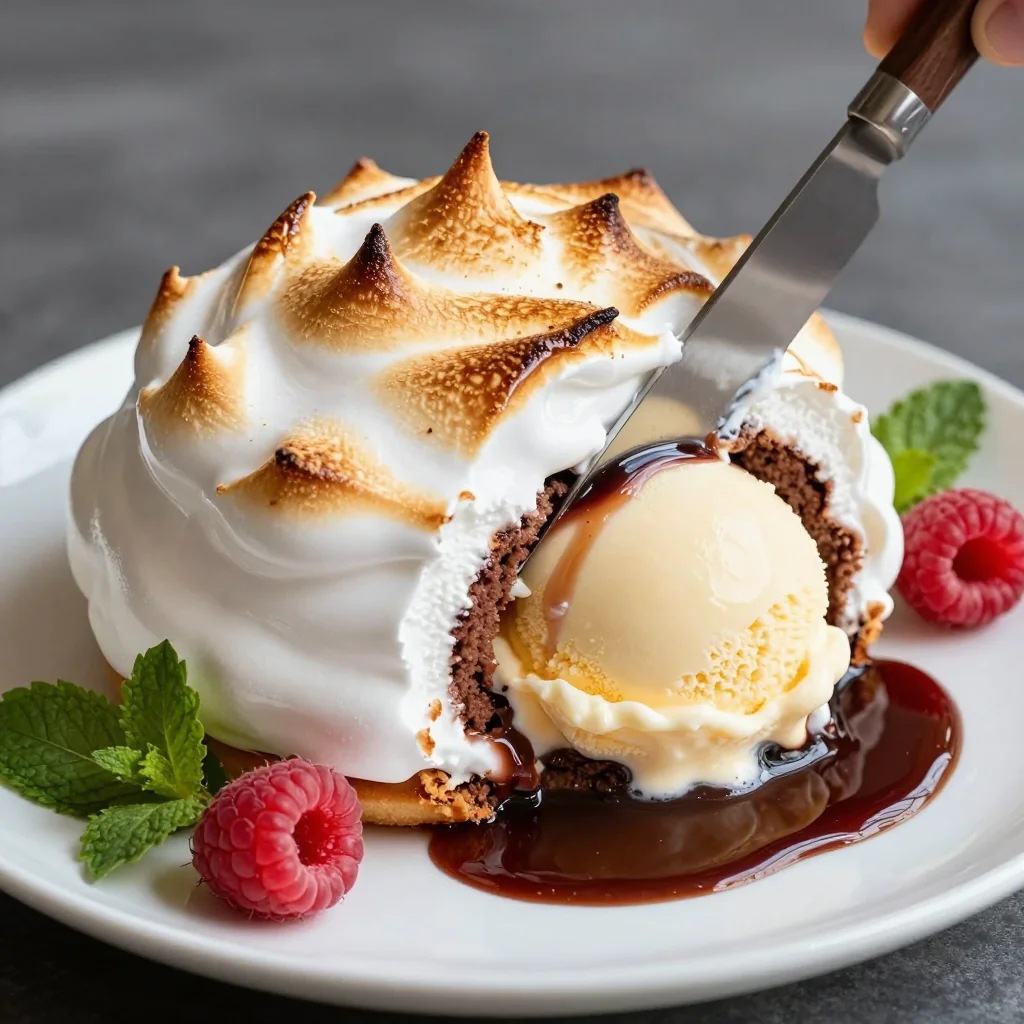
Run a thin offset spatula under the parchment to release. Center the Alaska on a chilled cake stand. Dip your sharpest knife in hot water, wipe dry, and slice in confident strokes; the contrast of crackling meringue, cold vanilla ice-cream, and pillowy sponge is pure theatre.
Serve immediately with a pitcher of warm chocolate sauce or raspberry coulis for guests to gild the lily. Expect applause.
Expert Tips
Temperature is everything
Keep your ice-cream at –10 °F (–23 °C) or colder until the moment you torch. A deep-freeze thermometer is cheap insurance against a slumped dome.
Egg-white purity
Even a trace of yolk will sabotage volume. Crack each white into a small cup before adding to the bowl; if a yolk breaks, save that white for scrambled eggs.
Slice timing
Dip, wipe, slice, wipe again. A hot blade glides through meringue without dragging; wiping between cuts keeps the layers postcard-perfect.
Double dome insurance
If your freezer is packed, freeze the ice-cream in two smaller bowls; fuse them together later with a quick blast of a hair-dryer to create one seamless sphere.
No weeping allowed
Under-whipped meringue weeps syrup. Beat until the mixture clumps inside the whisk and holds a peak that doesn’t droop when you invert the bowl.
Transport trick
Need to bring the Alaska to a party? Assemble at home, keep it frozen in a cooler with dry ice, and torch on site. The meringue insulates for up to 90 minutes.
Variations to Try
-
Mocha Baked Alaska
Swap vanilla ice-cream for coffee; brush the sponge with a 1:1 mix of espresso and Kahlúa. Dust finished meringue with shaved dark chocolate.
-
Lemon-Raspberry
Use lemon curd-swirl ice-cream; scatter freeze-dried raspberries inside the dome for a pop of color and tang.
-
Pistachio-Cherry
Layer pistachio ice-cream with chopped brandied cherries; replace vanilla in sponge with almond extract for marzipan vibes.
-
Vegan Showstopper
Use coconut ice-cream and an aquafaba Swiss meringue (3 Tbsp chickpea brine per white). Results are shockingly similar.
Storage Tips
Pre-assembly: The sponge can be baked, cooled, wrapped in a double layer of plastic, and stored at room temp for 24 hours or frozen for 1 month. The molded ice-cream dome keeps perfectly for 2 weeks if double-wrapped; after that it starts to absorb freezer odors.
Post-assembly, pre-torch: A meringue-coated Alaska can be frozen uncovered for up to 24 hours. Beyond that, loosely tent with foil (do not let it touch meringue) for up to 3 days. The texture of the meringue will gradually toughen, so torch as close to serving as possible.
Leftovers: Slice remaining Alaska, place pieces on a parchment-lined sheet, and freeze until solid. Transfer to an airtight container with parchment between layers; enjoy within 3 days for best texture. Re-torch slices for 5 seconds for that fresh-campfire look.
Frequently Asked Questions
Showstopper Baked Alaska with Vanilla Ice Cream
Ingredients
Instructions
- Prep pan & preheat: Grease and line an 8-inch round pan; preheat oven to 350 °F (177 °C).
- Make sponge: Whip yolks with half the sugar to ribbon stage. Fold sifted flour in thirds. Whip whites to stiff peaks with remaining sugar; fold into batter with melted butter. Bake 18–20 min. Cool completely.
- Mold ice-cream: Line a 2-qt bowl with plastic wrap. Pack slightly softened ice-cream in, pressing out air. Top with trimmed sponge. Freeze 6+ hours.
- Swiss meringue: Heat egg whites, sugar, and cream of tartar over simmering water to 160 °F. Whip to stiff glossy peaks; add vanilla.
- Assemble: Unmold ice-cream onto a chilled plate. Spread thin meringue layer; freeze 10 min. Pipe or swirl remaining meringue to cover completely.
- Torch: Broil or torch meringue until golden. Freeze 15 min. Slice with a hot knife and serve immediately.
Recipe Notes
For ultra-clean slices, dip your knife in hot water and wipe dry between each cut. The Alaska will keep frozen, wrapped loosely in foil, for up to 3 days after torching.