Picture this: I’m standing in my kitchen, a bag of potatoes trembling in my hand, and a friend has just dared me to create the most unforgettable Greek potato salad ever. I’ve tried the classics, the store‑bought mixes, the ones that taste like a grocery aisle, but none of them had that “wow” factor. The moment those golden skins cracked open, the aroma hit me like a warm hug—earthy, buttery, and promising something extraordinary. I could almost hear the sizzling whisper of the skillet, the faint clink of a glass of wine, and the gentle buzz of a summer evening. I knew right then that this wasn’t just another salad; it was a culinary revelation waiting to happen.
I started by chopping the potatoes into bite‑sized cubes, each one a tiny canvas for the flavors to come. The clatter of the knife against the cutting board sounded almost rhythmic, a metronome for the recipe’s tempo. As they boiled, the steam curled like a fragrant mist, filling the kitchen with the scent of plain potatoes ready to be transformed. I couldn’t help but grin at the thought of the bright, tangy dressing that would soon coat each piece like velvet. The anticipation built as I sliced cucumbers, diced onions, and sliced black olives, each ingredient adding its own personality to the mix.
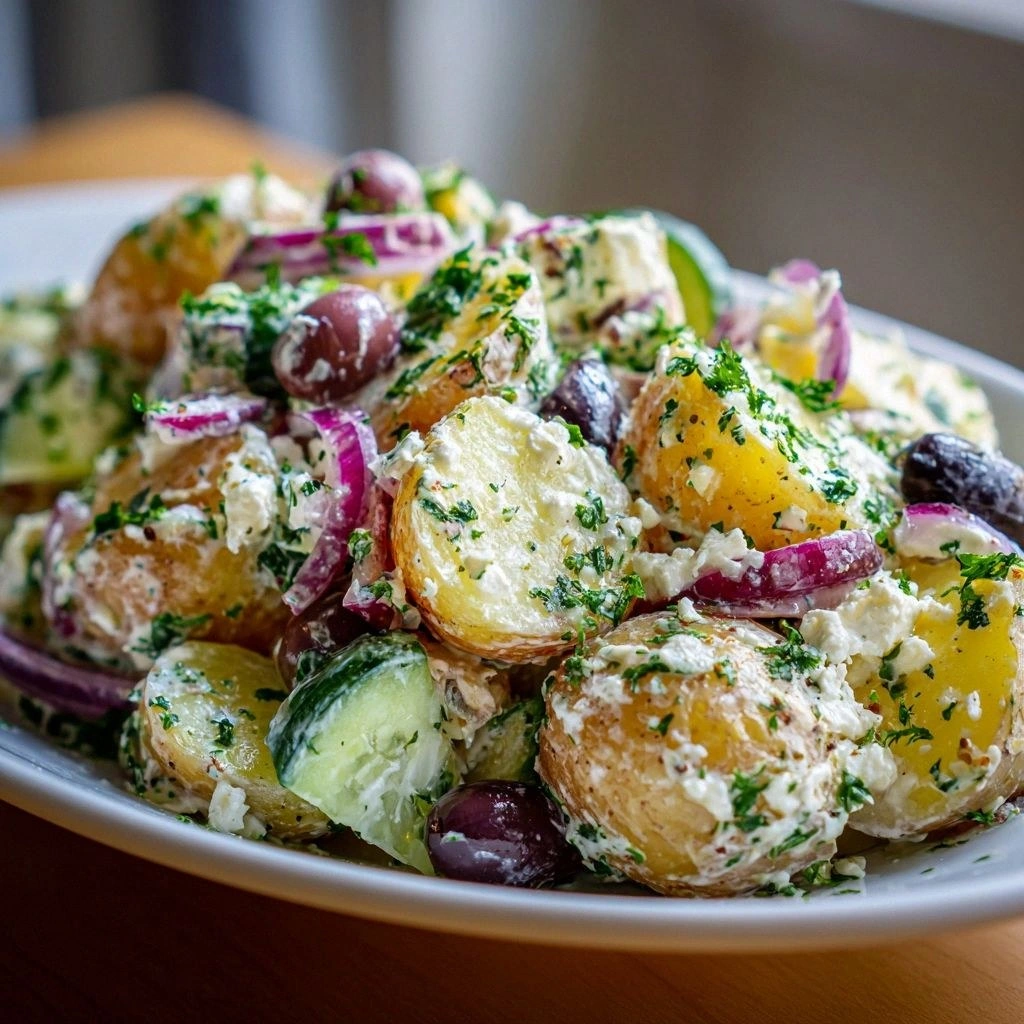
I’ve always believed that a salad’s success hinges on balance—texture, flavor, and visual appeal. This version pulls those elements together with precision. The potatoes stay fluffy yet firm, the cucumbers snap with a satisfying crunch, and the olives bring that salty depth that lingers on the palate. Feta cheese offers a creamy, slightly briny counterpoint, while fresh parsley injects a bright, herbal note that lifts the entire dish. Every bite feels like a Mediterranean summer, a burst of sunshine on a plate.
What sets this recipe apart is a secret ingredient that most people overlook: a splash of Greek yogurt in the dressing. It gives the vinaigrette a silky body that clings to the potatoes without making them soggy. I dare you to taste this and not go back for seconds—once you try it, you’ll be hooked. The combination of lemon, Dijon mustard, and yogurt creates a tangy, slightly sweet harmony that elevates the dish from ordinary to unforgettable. I’ll admit, I ate half the batch before anyone else even had a chance to try it.
Most recipes get this completely wrong, focusing on a simple olive oil and lemon combo that leaves the salad dry and bland. Here, the yogurt softens the acidity, the mustard adds depth, and a hint of honey balances the sharpness. The result is a dressing that coats the potatoes like a light blanket, keeping them moist while delivering a punch of flavor. The texture is perfect: the potatoes are tender, the cucumbers are crisp, and the olives pop with briny bursts. It’s the kind of dish that will have your guests asking for the recipe after every bite.
Picture yourself pulling this out of the pot, the whole kitchen smelling incredible, the plate glistening with olive oil and a drizzle of lemony glaze. The colors are vibrant: golden potatoes, green parsley, white feta, and black olives that contrast beautifully. The aroma is a symphony of Mediterranean herbs and citrus. If you’ve ever struggled with making a potato salad that doesn’t feel heavy or bland, you’re not alone—and I’ve got the fix. Let me walk you through every single step—by the end, you’ll wonder how you ever made it any other way.
What Makes This Version Stand Out
- Texture: The potatoes are boiled to a soft, almost melt‑in‑your‑mouth consistency, while the cucumbers retain a crisp bite that cuts through the creaminess.
- Flavor Depth: The combination of yogurt, Dijon mustard, and a splash of honey creates a balanced tang that pairs perfectly with briny olives.
- Freshness: Fresh parsley and a generous squeeze of lemon juice lift the dish, giving it a bright, aromatic finish.
- Visual Appeal: The vibrant colors—from golden potatoes to green parsley—make the salad as pleasing to the eye as it is to the palate.
- Ease of Prep: The steps are straightforward, requiring minimal chopping and no advanced techniques, making it a breeze even for beginners.
- Make‑Ahead Friendly: The salad can be prepared up to 24 hours in advance; the flavors meld beautifully, and the dressing can be whisked right before serving.
- Versatility: It works as a side dish, a light lunch, or a crowd‑pleasing appetizer for gatherings of any size.
Inside the Ingredient List
The Flavor Base
Potatoes are the backbone of this salad, delivering a hearty, comforting foundation that carries the dressing. They absorb the flavors of the yogurt‑lemon vinaigrette, turning each bite into a burst of Mediterranean bliss. If you skip them, the salad loses its body and becomes a light, watery mix. For the best results, choose waxy potatoes like red or Yukon Gold, which hold their shape and provide a pleasant bite.
Cucumbers add a refreshing crunch that balances the creamy texture of the potatoes. Their subtle sweetness and coolness contrast nicely with the tangy dressing, creating a multi‑sensory experience. If you prefer a softer texture, you can peel the cucumbers, but the skin adds a nice green hue and a hint of bitterness that cuts through richness. A good rule of thumb is to use one medium cucumber per two pounds of potatoes.
Red onion brings sharpness and a pop of color, its bite cutting through the richness of the feta and olives. Its pungent aroma awakens the senses, while the slight sweetness that develops during soaking adds depth. If you’re sensitive to raw onions, soak the sliced onion in cold water for 10 minutes, then drain to reduce sharpness. This step is optional but highly recommended for a smoother flavor profile.
The Unexpected Star
Black olives are the secret weapon that elevates this salad from ordinary to extraordinary. Their briny, umami flavor adds complexity and a savory undertone that complements the feta’s tang. If you can’t find Kalamata olives, you can use any good quality black olives, but the Greek varieties provide that authentic Mediterranean character. Be sure to drain them well to avoid excess saltiness.
Feta cheese is the creamy heart of the dish, offering a salty, tangy richness that balances the acidity of the lemon. Its crumbly texture contrasts beautifully with the smooth potatoes, creating a delightful mouthfeel. If you’re lactose intolerant, consider a vegan feta alternative or a small amount of crumbled goat cheese for a similar profile. The key is to use a good quality feta that melts just enough to integrate with the dressing.
The Final Flourish
Fresh parsley injects a bright, herbal note that lifts the entire dish, adding a layer of green freshness that pairs with the olives. It also provides a subtle peppery bite that rounds out the flavor profile. If parsley is out of season, mint or dill can serve as an interesting twist, but parsley remains the classic choice. Chop the parsley finely to ensure it disperses evenly throughout the salad.
Olive oil is the base of the dressing, providing richness and helping the yogurt coat the potatoes evenly. A high‑quality extra‑virgin olive oil adds a fruity, peppery undertone that enhances the Mediterranean vibe. If you’re looking for a lighter version, you can replace half the oil with Greek yogurt, but the oil is essential for the dressing’s silky texture. Use a cold‑pressed oil for the best flavor and health benefits.
Lemon juice delivers acidity that brightens the dish, cutting through the richness of the feta and oil. It also helps prevent the potatoes from turning brown after cutting. For a slightly sweeter citrus kick, add a teaspoon of honey or a splash of orange juice. The key is to balance the acidity with the yogurt’s mild tang to avoid a sharp, sour finish.
Dijon mustard adds a subtle depth and a gentle heat that complements the lemon’s brightness. It also acts as an emulsifier, helping the oil and lemon juice blend smoothly with the yogurt. If you’re allergic to mustard, a small amount of horseradish or a dash of Worcestershire sauce can provide a similar sharpness. Always taste as you go to adjust the mustard to your preference.
Salt and pepper are the final seasoning touches that bring all the flavors together. Salt enhances the natural sweetness of the potatoes and the briny olives, while pepper adds a gentle warmth. Use a flaky sea salt for a subtle crunch and freshly ground black pepper for a bright finish. Remember, seasoning is a personal touch—feel free to adjust to your taste.
Everything's prepped? Good. Let's get into the real action.
The Method — Step by Step
- Begin by boiling the potatoes in salted water for 15 minutes until they’re just tender. Use a fork to test—they should give slightly but not fall apart. Drain them and let them cool to room temperature, then cut into bite‑sized cubes. The goal is a firm yet tender bite that holds the dressing. While they’re still warm, let the flavors start to mingle.
- While the potatoes are cooling, slice the cucumbers into half‑moon shapes. If you prefer a softer texture, peel the cucumbers and slice them thinly. Rinse the slices under cold water to remove any bitterness and pat them dry. The cucumbers should be crisp but not crunchy—just enough to hold their shape in the salad.
- Dice the red onion into fine cubes, then soak them in a bowl of cold water for 10 minutes to reduce their sharpness. Drain and pat dry. The onion should be slightly milder, yet still provide a bright pop of flavor. This step is optional but highly recommended for a smoother, less pungent taste.
- Slice the black olives, removing any stems, and set them aside. The olives should be sliced thinly so they distribute evenly throughout the salad. If you’re using whole olives, simply crush them lightly with the back of a spoon for a more rustic texture. The olives add a salty, briny punch that balances the creamy feta.
- Crumb the feta cheese into a large mixing bowl. The feta should be crumbled into small, bite‑sized pieces, not shredded into a fine paste. This ensures each forkful gets a burst of tangy richness. If the feta is too dry, drizzle a splash of olive oil to soften it slightly.
- In a separate bowl, whisk together the Greek yogurt, olive oil, lemon juice, Dijon mustard, and a pinch of salt and pepper. The mixture should be smooth and creamy, with the oil and lemon fully emulsified into the yogurt. Taste the dressing and adjust the acidity with more lemon or the sweetness with a touch of honey if desired. This step is crucial—an unbalanced dressing can ruin the salad.
- Pour the dressing over the cooled potatoes, then gently fold in the cucumbers, onions, olives, and feta. Toss carefully so the potatoes don’t break apart, but ensure every ingredient is coated. Sprinkle the chopped parsley on top and give it one final gentle toss. The parsley should be evenly distributed, providing a fresh, herbal aroma.
- Taste the salad and adjust the seasoning—add more salt, pepper, or lemon juice as needed. Let the salad rest for 10 minutes at room temperature; this allows the flavors to meld and the dressing to settle. The rest period also helps the potatoes absorb the dressing fully.
- Serve immediately as a side dish, or chill in the refrigerator for up to 24 hours to let the flavors deepen. If you’re serving it later, give it a quick stir and check the seasoning before serving. The salad remains fresh, vibrant, and full of flavor even after a day.
That's it — you did it. But hold on, I've got a few more tricks that'll take this to another level.
Insider Tricks for Flawless Results
The Temperature Rule Nobody Follows
Always boil the potatoes until just tender, not overcooked. A slightly firm bite keeps the salad from turning mushy when dressed. Let the potatoes cool to room temperature before adding the dressing; hot potatoes can cause the dressing to separate. This simple temperature control ensures a silky, cohesive texture.
Why Your Nose Knows Best
Before you add the lemon, sniff the juice—it should smell bright and citrusy. A dull or fermented scent indicates the lemon is past its prime. Using fresh lemons not only adds flavor but also ensures the dressing emulsifies properly. Trust your nose; it’s the best quality control tool you have.
The 5-Minute Rest That Changes Everything
After tossing the salad, let it rest for exactly five minutes before serving. This brief pause allows the flavors to marry and the dressing to thicken slightly. If you’re in a hurry, a quick 30-second rest still helps; if you have time, a full 15 minutes yields even better results.
Keep the Olives in Brine
Store your black olives in a brine solution until ready to use. This keeps them crisp and prevents them from drying out. If you’re using pre‑sliced olives, rinse them in cold water and pat dry to remove excess salt before adding them to the salad.
Mind the Feta’s Fat Content
Use a feta with a moderate fat content; too low and it will crumble too quickly, too high and it becomes greasy. Look for a feta that’s firm yet creamy. If you prefer a lighter version, crumble a small amount of goat cheese or a vegan feta alternative to reduce fat while keeping the tang.
Make It a Meal in Minutes
Add a handful of cooked chickpeas or a grilled chicken breast to turn this salad into a hearty meal. The protein adds substance without overpowering the delicate flavors. Pair it with a crusty loaf of bread for a satisfying, Mediterranean‑inspired lunch.
Creative Twists and Variations
This recipe is a playground. Here are some of my favorite ways to switch things up:
Sun‑Dried Tomato Explosion
Replace half the cucumbers with chopped sun‑dried tomatoes for a sweet, smoky burst. The tomatoes add a chewy texture and a deep umami flavor that pairs beautifully with feta. This variation works well for summer picnics where you want a bit of extra zest.
Greek Yogurt Powerhouse
Boost the yogurt in the dressing to create a richer, creamier texture. Add a tablespoon of Greek yogurt to each cup of dressing for a velvety finish. This is perfect for those who love a luscious, indulgent salad.
Herb‑Infused Variation
Swap parsley for fresh dill or basil to give the salad a different aromatic profile. Dill adds a subtle minty note, while basil brings a sweet, peppery nuance. This change can transform the dish into a refreshing summer side.
Spicy Kick
Add a pinch of red pepper flakes or a dash of hot sauce to the dressing for a fiery twist. The heat complements the feta’s tang and the olives’ briny flavor. This version is great for those who enjoy a bit of spice.
Roasted Vegetable Fusion
Roast diced carrots and bell peppers along with the potatoes for a sweet, caramelized layer. The roasted veggies add depth and a touch of sweetness that contrasts nicely with the salty feta. This variation turns the salad into a more substantial side dish.
Vegan Version
Use a dairy‑free feta alternative and a plant‑based yogurt to keep the dish vegan. The texture remains creamy, and the flavors stay authentic. This version is ideal for guests with dietary restrictions.
Storing and Bringing It Back to Life
Fridge Storage
Store the salad in an airtight container in the refrigerator for up to 24 hours. The dressing will thicken slightly, so give it a quick stir before serving. If you’re preparing it ahead of time, keep the dressing separate and mix it in just before serving to preserve freshness.
Freezer Friendly
You can freeze the salad for up to 48 hours, but it’s best to keep the dressing separate. Freeze the potatoes, cucumbers, onions, olives, and feta in a single layer, then transfer them to a freezer bag. Thaw in the refrigerator overnight, then add the dressing and toss.
Best Reheating Method
When reheating, add a splash of water or a little more olive oil to the salad and gently warm it in a skillet over low heat. This prevents the potatoes from drying out and helps the dressing re‑emulsify. Avoid microwaving, as it can make the salad soggy.
Adding a tiny splash of water before reheating steams the salad back to perfection, keeping the potatoes fluffy and the dressing silky. Let the salad rest for a few minutes after reheating to allow the flavors to settle. Serve immediately for the best texture and taste.