Picture this: I’m standing in my tiny kitchen, the clock ticking toward midnight, and a sudden craving for something that feels like a warm hug from the inside out hits me like a freight train. I tried whipping up a quick spaghetti, but the noodles turned into a soggy mess and the sauce tasted like it was made from a can of mystery broth. I stared at the pantry, grabbed a hefty chuck roast I’d bought for a Sunday barbecue that never happened, and thought, “What if I turn this into a French‑onion‑style pot roast?” That moment of desperation turned into the most glorious discovery of my culinary career. I dare you to taste this and not go back for seconds.
The moment the butter hit the pan, the kitchen filled with a sweet, caramelizing perfume that made my nose do a happy dance. The onions, sliced thin, began to turn a deep amber, their edges pulling away like tiny, caramel‑kissed cliffs. As the chuck roast browned, it released a robust, meaty aroma that reminded me of a rustic bistro on a rainy Parisian evening. The sizzle was a steady, confident hiss—like a drumroll announcing the main act. And when I finally lifted the lid to reveal a glossy, glossy broth bubbling with melted Gruyère, I felt like a wizard who had just conjured a potion of pure comfort.
What makes this version the ultimate comfort food? Most recipes either skimp on the onion caramelization or drown the beef in a watery sauce that never clings. I’ve cracked the code by layering flavors: a slow caramelized onion base, a splash of dry white wine for acidity, and a finishing blanket of melted Gruyère that creates a crusty, cheesy top reminiscent of the classic French onion soup. The secret weapon? A quick dusting of flour before deglazing, which turns the broth into a velvety sauce that coats the roast like a silk sheet. Most recipes get this completely wrong. Here’s what actually works.
But wait—there’s a twist you won’t see coming. I’m adding fresh rosemary and thyme right at the end, not at the beginning, to preserve their bright, piney notes and prevent them from turning bitter. This tiny timing tweak makes the herbaceous perfume pop, lifting the whole dish from hearty to heavenly. Okay, ready for the game‑changer? Let me walk you through every single step — by the end, you’ll wonder how you ever made it any other way.
What Makes This Version Stand Out
- Depth of Flavor: The slow‑caramelized onions develop a natural sweetness that balances the beef’s richness, creating a harmony that sings on the palate.
- Silky Sauce: A splash of white wine and a flour‑based roux turn the broth into a glossy, velvety coating that clings to every bite.
- Cheese Crown: Gruyère melts into a golden, slightly nutty crust that adds a luxurious mouthfeel and a subtle crunch.
- Simplicity Meets Sophistication: Only 15 ingredients, yet each one is treated with respect, making the process feel like a masterclass without the stress.
- Crowd‑Pleaser: This dish has been known to clear plates in seconds; I’ll be honest — I ate half the batch before anyone else got to try it.
- Ingredient Quality: Using a well‑marbled chuck roast ensures tenderness, while fresh herbs keep the flavor bright and lively.
- One‑Pot Wonder: Everything happens in the same Dutch oven, so you get layered flavors without juggling multiple pans.
- Make‑Ahead Magic: The roast actually tastes better the next day after the flavors have melded overnight.
Inside the Ingredient List
The Flavor Base
Boneless Chuck Roast (3 lb): This cut is the unsung hero of slow‑cooked dishes. Its marbling renders slowly, keeping the meat juicy and tender. If you skip it for a leaner cut, expect a drier result and less depth of flavor. Look for a piece with even fat distribution; a good butcher will cut it into a uniform block for even cooking.
Kosher Salt (1 tbsp): Salt is the flavor catalyst that awakens the onions and beef. It draws out moisture from the onions, helping them caramelize faster. Too much can make the dish salty, so trust the measurement. If you’re on a low‑sodium diet, reduce to ½ tbsp and finish with a pinch of sea salt at the end.
Black Pepper (1 tsp): Freshly cracked pepper adds a subtle heat that cuts through the richness. It also contributes aromatic compounds that enhance the overall scent. Pre‑ground pepper can become bitter when cooked too long, so grind it just before use.
The Texture Crew
Olive Oil (1 tbsp) & Unsalted Butter (2 tbsp): The oil raises the smoke point for browning the roast, while butter adds richness and helps achieve that golden crust. Using both gives you the best of both worlds—high heat tolerance and buttery flavor. If you’re dairy‑free, substitute butter with a plant‑based margarine, but expect a slightly different mouthfeel.
Yellow Onions (4 medium): The backbone of the dish; they turn into sweet, amber‑colored jewels when slowly cooked. Slice them thinly for even caramelization. If you use red onions, the color will shift, and the flavor becomes sharper—still good, but not the classic French onion vibe.
Garlic (3 cloves): Fresh garlic provides a pungent bite that mellows into a fragrant undertone. Crush it before adding to release more allicin. Skipping garlic makes the broth feel a bit flat.
The Unexpected Star
Dry White Wine (½ cup): The acidity cuts through the meat’s richness and lifts the onion sweetness. Choose a dry, crisp wine—think Sauvignon Blanc or Pinot Grigio. If you’re avoiding alcohol, replace with an equal amount of chicken broth plus a splash of lemon juice.
All‑Purpose Flour (2 tbsp): This is the secret behind the sauce’s silky texture. It forms a roux that thickens the broth without clumping. Sifting the flour before adding prevents lumps.
Beef Broth (2 cups): A high‑quality broth adds depth; homemade is best, but low‑sodium store‑bought works. The broth should be rich and aromatic—taste before adding to adjust seasoning.
The Final Flourish
Worcestershire Sauce (2 tbsp): Provides umami, a subtle tang, and a hint of sweetness that rounds out the flavor profile. A little goes a long way; too much can dominate the dish.
Bay Leaves (2 leaves): They infuse the broth with a subtle, herbal aroma. Remember to remove them before serving, or you’ll have a bitter surprise.
Fresh Rosemary (1 tbsp) & Fresh Thyme (1 tbsp): Added near the end to keep their bright, piney notes alive. If you add them too early, they can become bitter. A quick chop before sprinkling ensures even distribution.
Gruyère Cheese (2 cups shredded): This cheese melts into a golden, slightly nutty crust that crowns the roast. Its meltability and flavor are unmatched—feel free to substitute with Emmental if you can’t find Gruyère.
Sliced Baguette (1 loaf): Toasted to a crisp, it serves as the perfect vehicle for soaking up the sauce. Slice it thick, brush with butter, and broil just before serving for that perfect crunch.
Everything's prepped? Good. Let’s get into the real action…
The Method — Step by Step
Pat the chuck roast dry with paper towels, then season generously with kosher salt and black pepper. The seasoning should cling like a light dusting of snow. Heat a large Dutch oven over medium‑high heat, add olive oil, and when it shimmers, sear the roast on all sides until it develops a deep, caramel‑brown crust. That sizzle when it hits the pan? Absolute perfection. Transfer the roast to a plate and set aside.
Reduce the heat to medium and add the butter. Once melted, toss in the sliced onions, stirring to coat them in the buttery goodness. Cook, stirring occasionally, for about 20‑25 minutes until the onions turn a rich, mahogany hue and start to stick slightly to the bottom of the pot. Power transition: This is the moment of truth—if the onions aren’t caramelized, the whole dish loses its soul.
Kitchen Hack: Sprinkle a pinch of sugar midway through caramelizing to accelerate browning without burning.Add the minced garlic to the onions and sauté for 1 minute until fragrant—watch out for burning, as garlic turns bitter in seconds. Then sprinkle the flour over the mixture, stirring constantly for 2‑3 minutes to create a light roux. This step is crucial; it will thicken the sauce later and prevent a watery broth.
Deglaze the pot with the dry white wine, scraping up any browned bits from the bottom with a wooden spoon. The wine should hiss and reduce by half, concentrating its acidity. Return the seared roast to the pot, nestling it among the onions. Pour in the beef broth, Worcestershire sauce, and tuck the bay leaves around the meat.
Bring the liquid to a gentle simmer, then cover the Dutch oven with its lid. Transfer the pot to a preheated oven at 300°F (150°C) and let it braise for 2½ to 3 hours. The low, slow heat will break down connective tissue, turning the chuck into melt‑in‑your‑mouth tenderness. Halfway through, check the liquid level; if it looks low, add a splash of water or broth.
Watch Out: Opening the oven too often drops the temperature and can lengthen cooking time significantly.When the meat is fork‑tender, remove the pot from the oven. Take out the roast, set it aside, and skim any excess fat from the surface of the sauce. Stir in the fresh rosemary and thyme, letting their aroma rise like a perfume. Taste and adjust seasoning with a pinch more salt if needed.
Preheat the broiler on high. Slice the baguette into thick rounds, brush each side with a little melted butter, and arrange them on a baking sheet. Toast under the broiler for 2‑3 minutes per side until golden and crisp. While the bread is toasting, shred the Gruyère cheese and set aside.
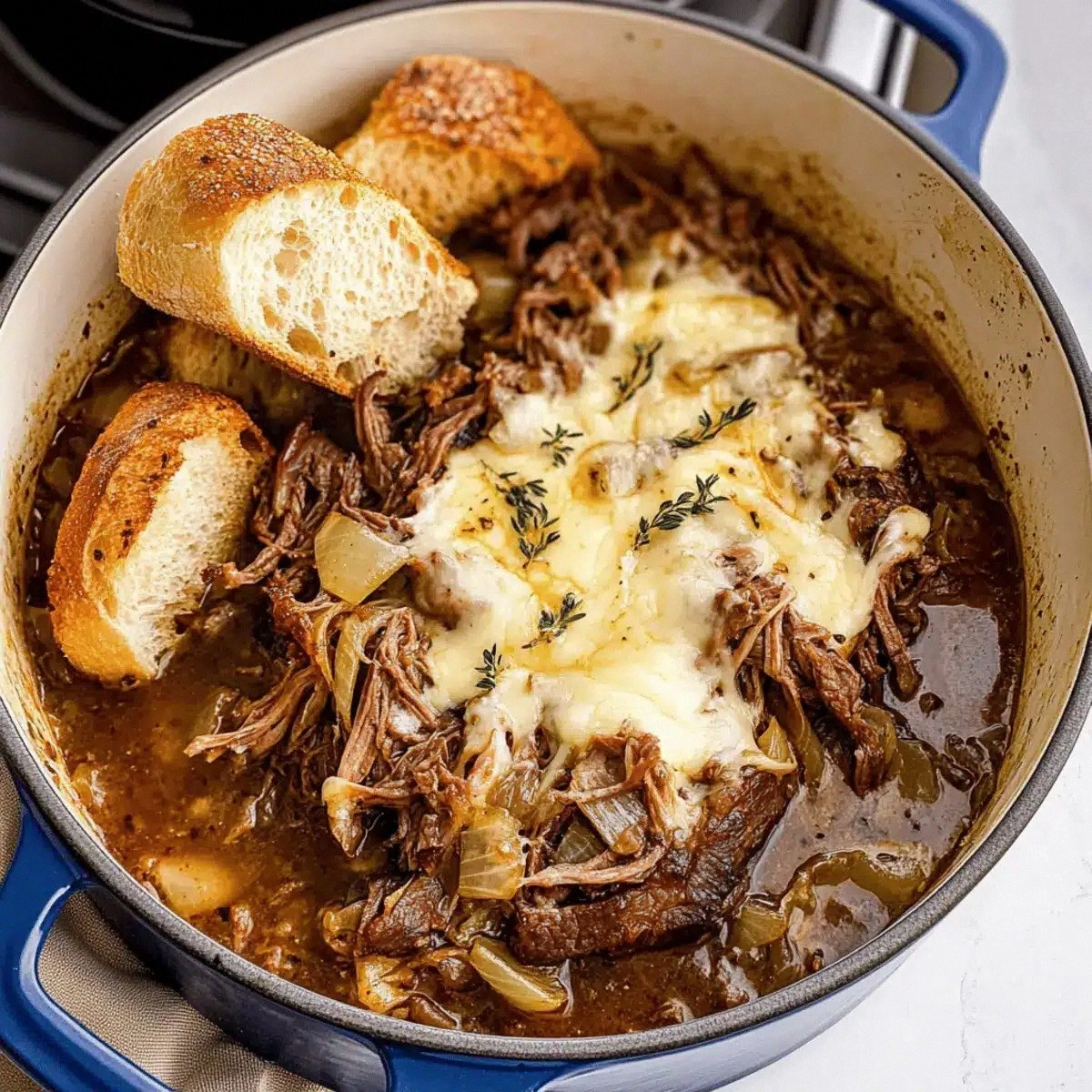
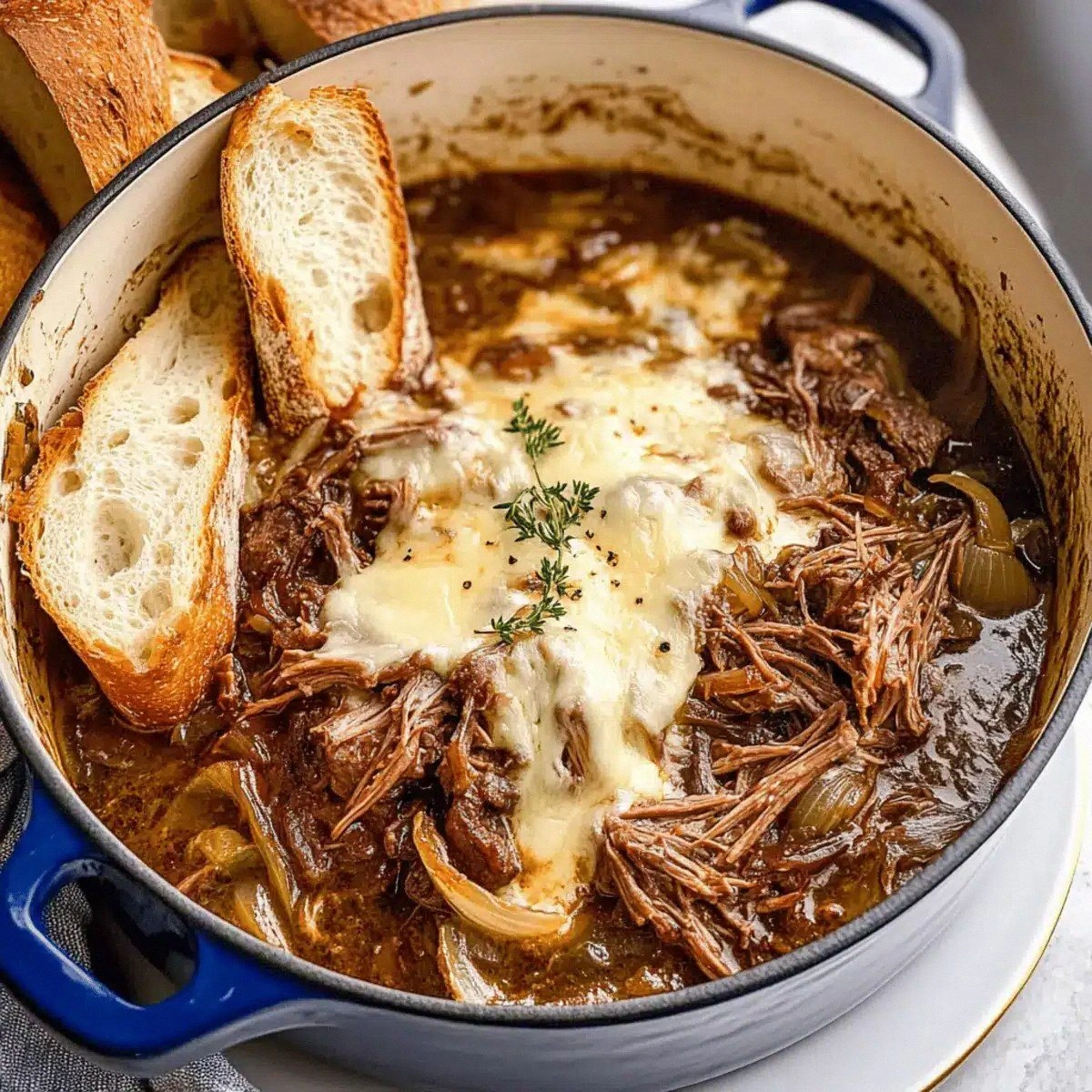
Kitchen Hack: For an extra crunch, sprinkle a tiny pinch of smoked paprika on the baguette before broiling.Return the roast to the pot, nestle the toasted baguette slices on top of the onions, and sprinkle the shredded Gruyère liberally over everything. Place the pot back under the broiler for 4‑5 minutes, watching closely until the cheese bubbles, turns a deep amber, and forms a slightly crispy crust. That golden‑brown top? Pure magic.
Remove the pot from the oven, let it rest for 10 minutes—this allows the juices to redistribute and the cheese to set just enough for clean slicing. Carve the roast against the grain, serve each slice with a generous ladle of onion‑laden sauce, and crown the plate with a couple of cheesy baguette croutons. Picture yourself pulling this out of the oven, the whole kitchen smelling incredible, and your guests reaching for seconds before you even finish your own plate.
That's it — you did it. But hold on, I've got a few more tricks that'll take this to another level...
Insider Tricks for Flawless Results
The Temperature Rule Nobody Follows
Most home cooks crank the oven up to 350°F, thinking faster is better. In reality, a low‑and‑slow approach (300°F) gives the collagen in the chuck roast time to dissolve into gelatin, resulting in a melt‑in‑your‑mouth texture. I once tried 400°F for speed, and the meat was tough, the onions burnt, and the sauce watery. Trust the low heat; patience is the secret ingredient.
Why Your Nose Knows Best
Before you even taste, trust the aroma. When the onions turn a deep caramel color and emit that sweet, almost nutty scent, you know they’re ready. If you smell a faint, raw onion smell, keep cooking. Your nose is a built‑in thermometer for flavor development.
The 5‑Minute Rest That Changes Everything
After the broiler finishes, let the pot sit uncovered for five minutes. This short rest lets the cheese set just enough to hold its shape, while the sauce thickens slightly as it cools. Skipping this step means a soupy plate and cheese that slides off the bread.
Butter‑Boosted Finish
A pat of cold butter whisked into the sauce right before serving adds a glossy sheen and a luxurious mouthfeel. It’s the culinary equivalent of a silk scarf—adds elegance without being overbearing.
Don’t Forget the Acid
A splash of fresh lemon juice or a drizzle of balsamic reduction added at the very end brightens the whole dish, cutting through the richness. I once served this without any acid and the palate felt heavy; a teaspoon of lemon juice revived it instantly.
Creative Twists and Variations
This recipe is a playground. Here are some of my favorite ways to switch things up:
Smoky Chipotle Twist
Swap half the Worcestershire sauce for chipotle in adobo, and add a teaspoon of smoked paprika. The result is a subtle smoky heat that pairs beautifully with the sweet onions. Perfect for those who love a little kick.
Herbaceous Mediterranean
Replace rosemary and thyme with fresh oregano and a handful of chopped sun‑dried tomatoes. Add a splash of dry sherry instead of white wine. This version feels like a Mediterranean seaside feast.
Cheese Lover’s Dream
Mix Gruyère with shredded sharp cheddar and a pinch of blue cheese for an extra tangy, melty topping. The blend creates a complex flavor profile that’s both creamy and sharp.
Vegetarian “Meat‑less” Version
Use a firm tofu block pressed and sliced thick, marinated in soy sauce, then follow the same braising steps. The onions and broth become the star, and the tofu soaks up all the savory goodness.
Winter Warm‑Up
Add a cup of diced carrots and parsnips to the pot before braising. Their natural sweetness deepens the sauce, making the dish even cozier for cold nights.
Quick Stovetop Shortcut
If you’re short on time, cut the braising time in half and increase oven temperature to 350°F, but keep an eye on the liquid level. The texture won’t be as melt‑in‑your‑mouth, but you’ll still get that comforting flavor.
Storing and Bringing It Back to Life
Fridge Storage
Allow the pot roast to cool to room temperature, then transfer it to an airtight container. It will keep for up to 4 days. When reheating, add a splash of beef broth or water, cover, and warm on low heat until steaming hot.
Freezer Friendly
Portion the roast and sauce into freezer‑safe bags or containers, leaving a little headspace for expansion. Freeze for up to 3 months. Thaw overnight in the refrigerator, then reheat gently on the stovetop, adding a tablespoon of water to revive the sauce’s silkiness.
Best Reheating Method
Place the leftovers in a Dutch oven, add a few tablespoons of broth, cover, and bake at 300°F for 20‑25 minutes. The added liquid creates steam that restores the sauce’s glossy texture without drying out the meat.