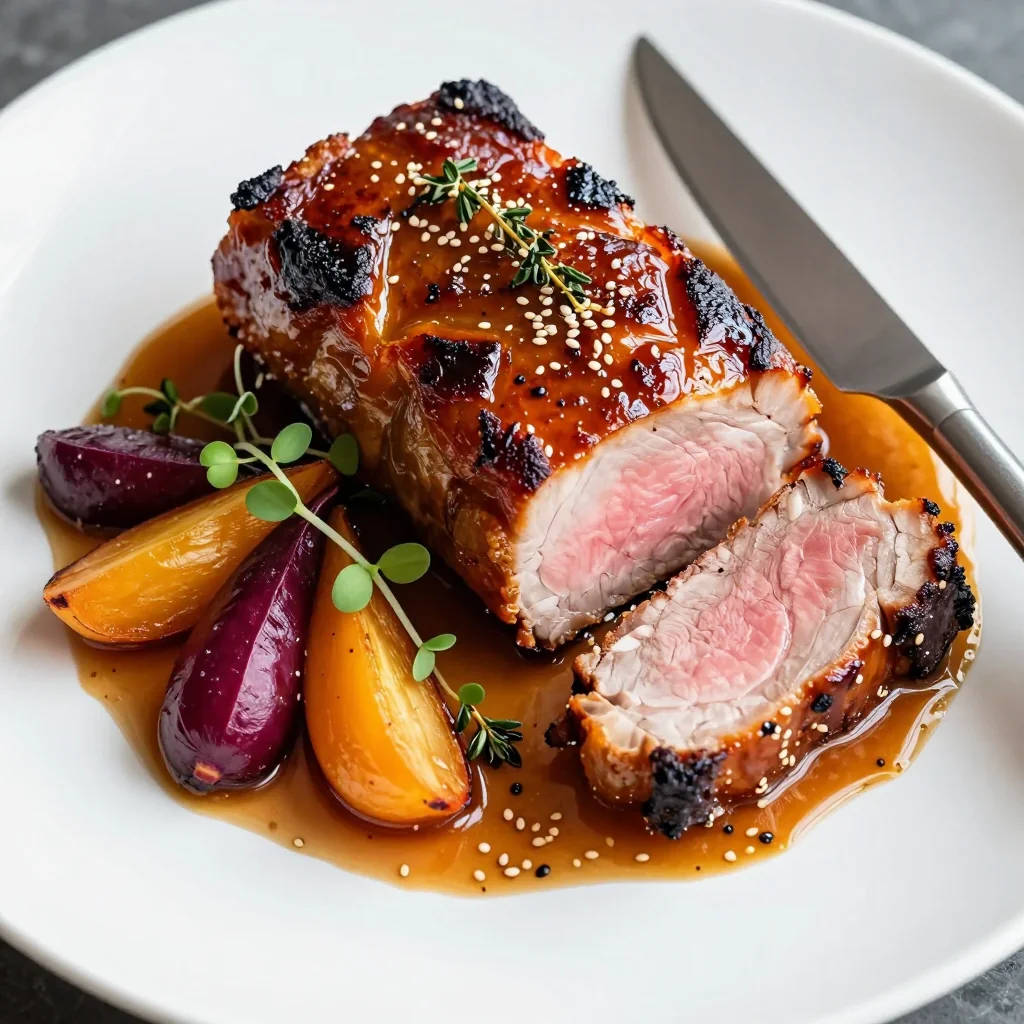
Love this? Pin it for later! 📌
Honey Mustard Glazed Pork Tenderloin: The Juiciest Weeknight Showstopper
There’s a moment—about ten minutes after this honey-mustard glazed pork tenderloin comes out of the oven—when my kitchen smells like a French bistro married a Southern barbecue joint and everybody RSVPed “yes.” The first time I served it to company, my neighbor literally hovered by the stove, fork in hand, asking if the meat needed to “rest any longer” (code for: can we eat yet?). That was three years ago, and the recipe has since become my most-requested dish for everything from baby showers to book-club nights. It’s fast enough for Tuesday, elegant enough for Saturday, and forgiving enough that you can chat, sip wine, and still plate something that looks like culinary school finals week. Today I’m sharing every trick—brining, searing, glazing, slicing—so you can own the “How is this so tender?!” conversation at your table next.
Why This Recipe Works
- Quick brine: A 20-minute salt-sugar bath seasons the meat to the center and buys you a full window of juicy forgiveness even if you accidentally overcook by a minute or two.
- Two-zone sear & roast: Starting on the stovetop for color, then finishing in a moderate oven, delivers a rosy interior without the dried edges you get from high-heat-only methods.
- Double glaze: One coat before roasting for caramelized depth, a second coat at the end for glossy, sticky freshness.
- Balanced sweetness: Honey brings floral notes, whole-grain mustard adds sharpness, and a splash of cider vinegar keeps the glaze from sliding into candy territory.
- One-pan sauce: Deglazing the skillet with the remaining glaze plus a pat of butter creates an instant au-jus—no extra pots.
- Slice-smart presentation: Cutting on the bias into medallions maximizes surface area for that shiny lacquer and fools everyone into thinking you went to culinary school.
Ingredients You'll Need
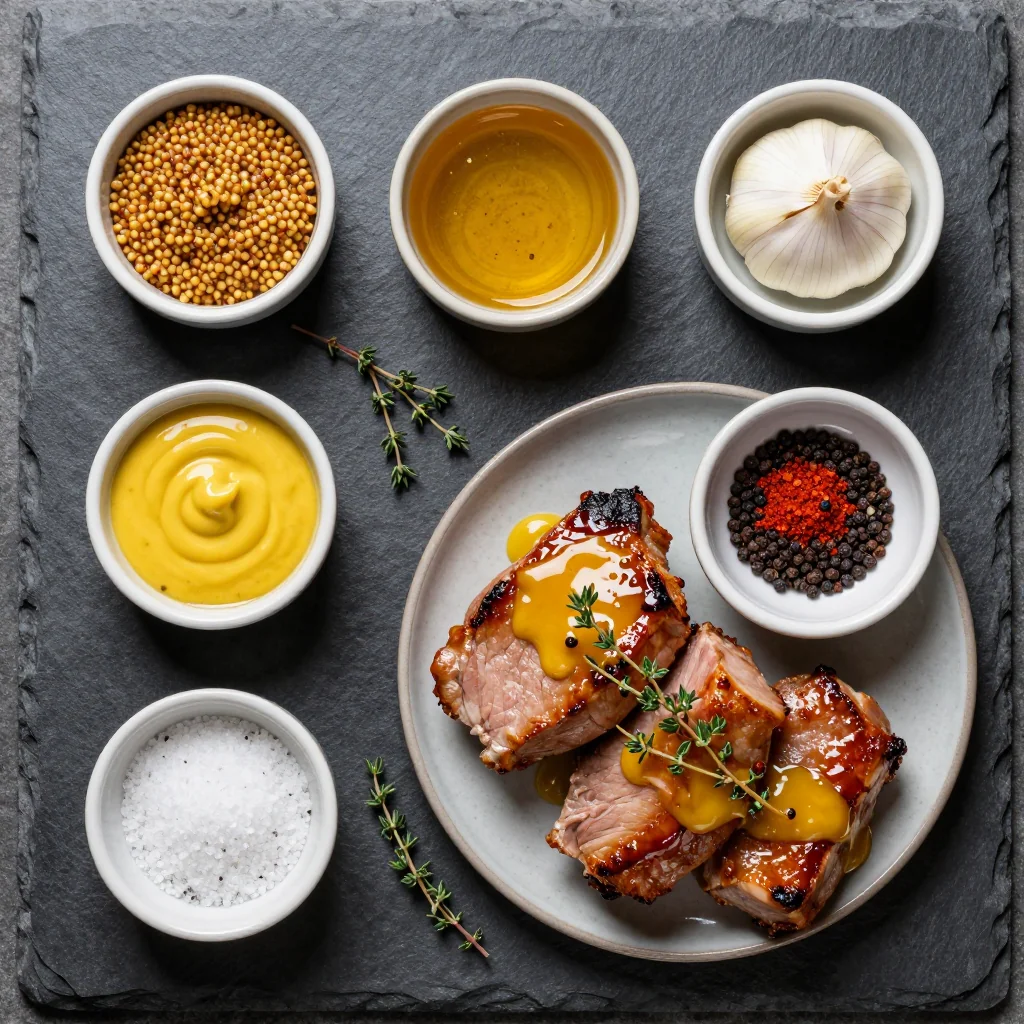
Pork tenderloin is the filet mignon of the pig—lean, buttery-textured, and naturally portioned into neat rounds. Look for rosy, firm meat that’s wrapped in a thin, silvery membrane (silverskin). Most supermarket tenderloins come two to a package; cook both and you’ll have stellar leftovers, or freeze the second one in the glaze for a future no-think dinner. I prefer organic or pasture-raised pork: the fat is cream-colored rather than chalky white and the flavor is sweeter, rounder.
Honey: Any floral honey works—wildflower, clover, orange-blossom. Avoid dark buckwheat unless you want a malty, molasses vibe. If your cupboard only holds agave or maple, you can swap either 1:1; just know the glaze will be slightly thinner.
Mustard trio: Whole-grain Dijon for pops of texture, smooth Dijon for emulsifying power, and a whisper of dry mustard for back-of-the-throat heat. No whole-grain? Double the smooth and add ½ tsp brown mustard seeds for crunch.
Apple cider vinegar: Rounds out sweetness and jump-starts the Maillard reaction. In a pinch, rice vinegar or fresh lemon juice works.
Fresh herbs & aromatics: Thyme, rosemary, and parsley stems perfume the glaze; garlic adds nuttiness once it hits the hot pan. Strip leaves from the thyme; woody stems can be bitter.
Butter & oil: A 50-50 mix raises the smoke point so you can sear aggressively without setting off every smoke detector you own.
Chicken stock: Low-sodium so you control saltiness. Want to go next-level? Replace ¼ cup stock with dry hard cider for fruity depth.
How to Make Honey Mustard Glazed Pork Tenderloin Tender and Juicy
Brine for guaranteed juiciness
In a medium bowl, whisk 2 cups very warm tap water with 2 Tbsp kosher salt and 2 Tbsp brown sugar until dissolved. Add 1 cup ice to cool quickly. Submerge pork tenderloin(s), cover, and let stand 20 minutes (up to 1 hour if your evening timeline implodes). Remove, rinse briefly, and pat extremely dry with paper towels—surface moisture is the enemy of a good sear.
Make the glaze
While the pork bathes, combine ¼ cup honey, 2 Tbsp whole-grain Dijon, 1 Tbsp smooth Dijon, 1 tsp dry mustard, 1 Tbsp apple cider vinegar, 1 tsp soy sauce, 1 minced garlic clove, ¼ tsp each kosher salt and black pepper, and 1 tsp fresh thyme leaves. Whisk until satin-smooth; set half aside for finishing.
Season & tie for even shape
Sprinkle the dried tenderloin with ½ tsp kosher salt and ½ tsp freshly cracked pepper per side. If one end is dramatically thinner than the other, fold it under and secure with 2-inch intervals of kitchen twine; this keeps the roast uniformly thick so the center isn’t rare while the tail is shoe leather.
Sear for flavor foundation
Heat a heavy, oven-safe skillet (cast iron or stainless) over medium-high until a drop of water skitters. Add 1 Tbsp neutral oil and 1 Tbsp butter; swirl. Lay the tenderloin away from you—hear that confident sizzle. Sear 2–3 minutes per side until deeply caramelized, using tongs to hold it against curved sides. You’re not cooking through, just laying down fond (browned bits) that will later perfume the pan sauce.
First coat of glaze
Brush seared pork with half of the reserved glaze, turning to coat. The honey will want to slide off—just keep brushing until it adheres like lacquer.
Roast to perfect doneness
Transfer skillet to a 400 °F (204 °C) oven. Roast 10–12 minutes, until the thickest part registers 135 °F (57 °C) on an instant-read thermometer. Carry-over cooking will nudge it to a final 145 °F (63 °C) while it rests.
Rest, then final glaze
Move pork to a cutting board, tent loosely with foil, and rest 8 minutes. While waiting, warm the remaining glaze in microwave 10 seconds so it brushes easily. Paint a glossy second coat just before slicing for that bakery-window shine.
Deglaze for two-minute pan sauce
Set skillet over medium; add ½ cup low-sodium chicken stock and 1 Tbsp butter. Scrape browned bits with a wooden spoon; simmer 2 minutes until silky. Drizzle over sliced medallions or serve alongside for dipping.
Expert Tips
Don’t skip the thermometer
Pork moves from blush-pink to gray in the blink of an eye. An instant-read probe is insurance; pull at 135 °F for rosy 145 °F after rest.
Cold-pan sear trick
If your tenderloin is fridge-cold, you can start it in an unheated skillet and bring heat to medium—renders a whisper more fat and prevents bowing.
Honey swaps & scorch watch
Maple or agave scorch faster—lower oven temp by 25 °F and add 2 extra minutes if you substitute.
Cast-iron care
After deglazing, rinse pan with hot water (no soap), dry on burner 30 seconds, then wipe with ½ tsp oil to maintain seasoning.
Slice on the bias
A 30-degree angle increases surface area so every bite carries more glaze and looks restaurant-plated.
Flash-freeze leftovers
Lay sliced medallions on a parchment-lined sheet; freeze 30 minutes, then bag. They won’t clump, and you can grab a handful for salads later.
Variations to Try
- Spicy Kick: Whisk ½ tsp chipotle powder into glaze and replace apple cider vinegar with lime juice.
- Herb-Crusted: Press 2 Tbsp finely chopped mixed herbs (parsley, tarragon, chives) onto the second glaze layer before returning to oven for 2 final minutes.
- Asian-Inspired: Sub in 1 Tbsp miso + 1 Tbsp rice vinegar for soy sauce; finish with toasted sesame seeds and scallion.
- Autumn Fruit: Roast 1-inch cubes of butternut squash and seedless grapes alongside the pork; they’ll caramelize in the glaze runoff.
Storage Tips
Refrigerate: Cool completely, then store sliced pork in an airtight container up to 4 days. Pour any extra pan juices over to keep meat moist.
Freeze: Wrap whole tenderloin (or slices) tightly in plastic, then foil; freeze up to 3 months. Thaw overnight in fridge, then gently reheat in a covered skillet with 2 Tbsp broth at 300 °F for 10 minutes.
Make-Ahead Meal Prep: Brine, sear, and coat with first glaze earlier in the day; refrigerate on a plate, uncovered, so the coating dries slightly (helps it stick). When ready to serve, roast as directed, adding 2–3 minutes to compensate for chill.
Frequently Asked Questions
Place slices in a skillet with ¼ cup broth, cover, and warm over low 5–6 min. Alternatively, vacuum-seal and sous-vide at 140 °F for 15 minutes.
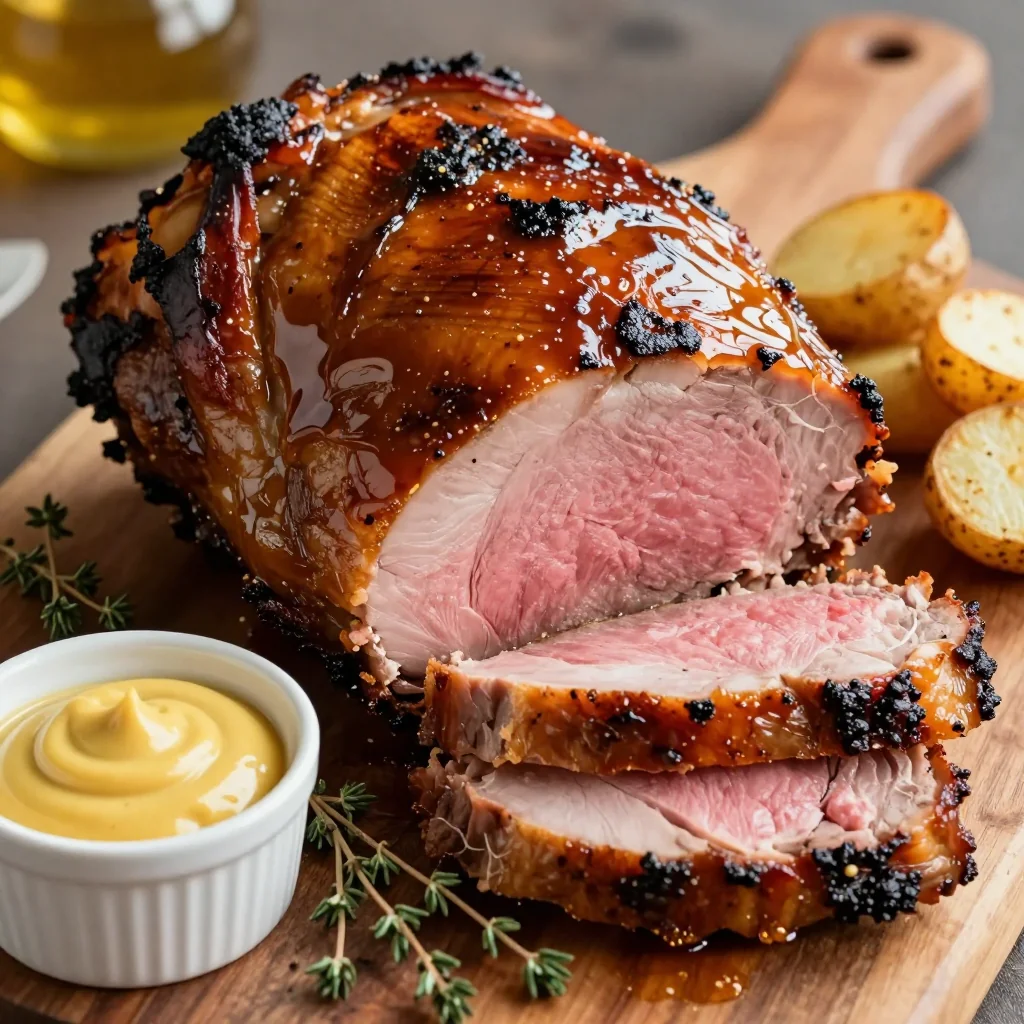
Honey Mustard Glazed Pork Tenderloin Tender and Juicy
Ingredients
Instructions
- Brine: Dissolve salt & brown sugar in 2 cups warm water; add ice. Brine tenderloins 20 minutes. Rinse and pat very dry.
- Glaze: Whisk honey, mustards, dry mustard, vinegar, soy sauce, garlic, thyme, and pepper. Divide in half.
- Season: Sprinkle pork with ½ tsp each salt & pepper per side; tie tapered ends if needed.
- Sear: Heat oil & butter in oven-safe skillet over medium-high. Sear pork 2–3 min per side until browned.
- Roast: Brush with first half of glaze. Bake at 400 °F for 10–12 min until 135 °F internal.
- Rest & finish: Tent with foil 8 min. Warm remaining glaze; brush on before slicing.
- Pan sauce: Add stock & butter to hot skillet; simmer 2 min, scraping bits. Serve with pork.
Recipe Notes
Tenderloins vary in thickness—always rely on thermometer, not clock. Leftovers reheat beautifully in a covered skillet with a splash of broth.