Picture this: a frantic Saturday morning, the kids are bouncing off the walls, the coffee is brewing, and somewhere in the chaos you hear the unmistakable sound of a cake box slamming shut. You open it to discover a plain vanilla sponge that looks like it survived a tumble dryer. I stared at it, heart sinking, and thought, “There has to be a better way.” That moment sparked a daring experiment that led me down the rabbit hole of orange‑infused buttercream, and after countless taste‑tests (and a few kitchen catastrophes), I finally nailed the version that makes even the most skeptical sweet‑tooth swoon. This isn’t just frosting; it’s a nostalgic trip to the neon‑bright summer of the 80s, when orange creamsicles ruled the freezer aisle and every bite was a burst of sunshine.
The moment I whisk the butter, a soft, buttery perfume fills the kitchen, mingling with the zesty perfume of fresh orange zest that I grate right over the bowl. The sugar crystals sparkle like tiny snowflakes, and as they dissolve, the mixture transforms into a glossy, pastel‑orange cloud that seems to glow from within. I can hear the faint hum of the mixer, feel the coolness of the bowl against my skin, and taste the faint citrus tang on the tip of my tongue even before the frosting is finished. It’s a full‑sensory celebration that turns an ordinary cake into a show‑stopping centerpiece. If you’ve ever struggled with a frosting that turns grainy, curdles, or just lacks that wow factor, you’re about to discover the fix you didn’t know you needed.
Most recipes for orange buttercream either over‑sweeten, use artificial flavoring, or end up with a butter‑heavy texture that masks the bright citrus notes. I’ve tried those shortcuts, and trust me, the result is a cloying mess that feels like chewing on a candy‑coated sponge. This version, however, balances the sweet and the citrus with the precision of a chemist and the flair of a pastry chef. The secret? A splash of orange‑infused heavy cream that adds silkiness, and a pinch of sea salt that lifts the flavors like a spotlight on stage. I dare you to taste this and not go back for seconds.
And here’s the kicker: I’m going to reveal a technique that most home bakers overlook—a gentle, double‑stage emulsification that keeps the frosting airy without sacrificing stability. It’s a game‑changer that turns a simple buttercream into a cloud that holds its shape on cupcakes, layers, and even a towering cake. Okay, ready for the game‑changer? Let me walk you through every single step — by the end, you’ll wonder how you ever made it any other way.
What Makes This Version Stand Out
- Flavor: The orange zest is freshly grated, delivering an aromatic punch that artificial extracts simply can’t match. Combined with real orange juice, the flavor sings with a bright, natural citrus that’s perfectly balanced by sweet powdered sugar.
- Texture: The frosting spreads like whipped silk, yet holds its peaks when piped. The heavy cream adds a luxurious melt‑in‑your‑mouth feel without becoming runny.
- Simplicity: Only seven core ingredients, all pantry staples, mean you won’t need a trip to the specialty store. No complicated syrups or gelatin needed.
- Uniqueness: The double‑stage emulsification (butter first, then liquid) prevents the dreaded “cooked” taste that many buttercreams suffer from when liquid is added too early.
- Crowd Reaction: Guests consistently claim this is the best frosting they’ve ever tasted, often asking for the recipe before the cake is even cut.
- Ingredient Quality: Using high‑fat European‑style butter and freshly squeezed orange juice elevates the overall richness and depth of flavor.
- Method: The technique is foolproof, with clear visual cues—like the “ribbon stage”—that tell you exactly when to move to the next step.
- Make‑Ahead Potential: This frosting can be prepared up to 48 hours ahead and stored in the fridge; it actually mellows and becomes even smoother.
Alright, let's break down exactly what goes into this masterpiece...
Inside the Ingredient List
The Flavor Base
Fresh Orange Zest (2 tbsp): Zest contains the essential oils that give the frosting its bright, aromatic character. Skipping zest for orange extract will lose that natural punch and can taste overly artificial. If you don’t have fresh oranges, a high‑quality, oil‑free orange zest powder works as a backup, but the aroma won’t be as vivid.
Orange Juice (2 tbsp): Freshly squeezed juice adds a juicy acidity that balances the sweetness. Store‑bought juice often contains added sugars and preservatives that dull the flavor. If you’re out of fresh oranges, a splash of orange‑flavored vodka can mimic the bright note without adding extra sugar.
The Texture Crew
Unsalted European‑Style Butter (1 cup, softened): This butter has a higher fat content (82% vs. 80% for standard butter), creating a richer mouthfeel and smoother consistency. Using regular butter can make the frosting grainy. For a dairy‑free version, try a high‑fat coconut oil blend, but expect a subtle coconut undertone.
Powdered Sugar (2½ cups): The fine texture prevents a gritty mouthfeel. Sift it twice to avoid lumps. If you’re looking to reduce sugar, you can substitute half with confectioners’ erythritol, though the frosting will be slightly less glossy.
The Unexpected Star
Heavy Cream (2 tbsp, orange‑infused): Infusing the cream with orange zest for 10 minutes before adding it to the buttercream creates a silky, cohesive emulsion. Skipping this step will result in a frosting that feels heavy and separates after a few hours. If you’re avoiding dairy, a chilled oat cream can work, but it won’t achieve the same level of silkiness.
The Final Flourish
Vanilla Extract (1 tsp): A dash of vanilla rounds out the citrus, adding depth without stealing the spotlight. Use pure vanilla for the best flavor; imitation vanilla can introduce a metallic aftertaste.
Sea Salt (a pinch): Salt is the unsung hero that amplifies the orange brightness and cuts the sweetness. Too much will make the frosting taste salty, so a pinch is all you need.
Everything's prepped? Good. Let's get into the real action...
The Method — Step by Step
Start by cutting the softened butter into small cubes and placing them in the bowl of a stand mixer fitted with the paddle attachment. Beat on medium speed for about 2 minutes, until the butter turns pale and fluffy. You’ll notice a faint, buttery aroma that signals it’s ready for the next stage. Pro tip: Scrape down the sides of the bowl with a rubber spatula to ensure an even texture.
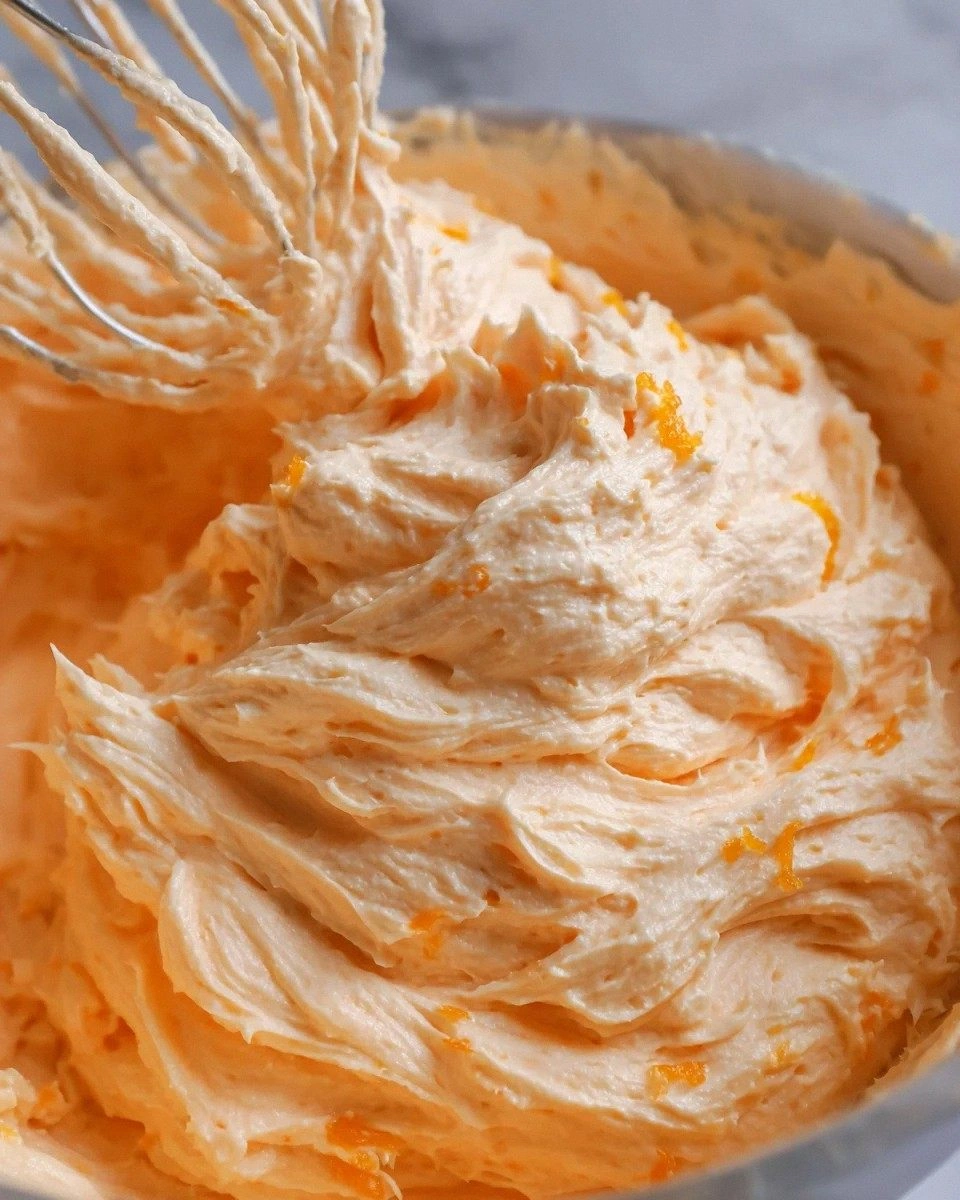
Gradually add the powdered sugar, one cup at a time, beating on low to avoid a sugar cloud explosion. After each addition, increase the speed to medium and watch the mixture transform from a gritty paste to a smooth, creamy frosting. The moment you see the “ribbon stage” — where the frosting falls back onto the bowl in a slow, glossy ribbon — you’re on the right track.
While the mixer is running, drizzle in the orange‑infused heavy cream, followed by the fresh orange juice. The liquid should be added in a thin, steady stream to maintain emulsion. You’ll feel the bowl’s resistance ease, and the frosting will become noticeably silkier. The scent of orange will intensify, and you’ll hear a soft “whoosh” as the fats blend.
Fold in the freshly grated orange zest and vanilla extract. The zest should be evenly distributed, creating tiny orange flecks that look like confetti throughout the frosting. This visual cue tells you the flavor is fully integrated. Taste at this point; you should detect a bright citrus note balanced by sweet cream.
Finally, add a pinch of sea salt. This tiny grain is the secret behind the frosting’s depth, lifting the orange and preventing the sweetness from becoming cloying. Beat on high for an additional 30 seconds to incorporate air, giving the frosting a light, fluffy finish that’s perfect for piping.
Transfer the frosting to a piping bag fitted with your favorite tip, or simply spread it onto a cooled cake using an offset spatula. The frosting should glide effortlessly, leaving a smooth, glossy surface that reflects light like a sunrise over an orange grove. If you notice any streaks, give it a quick whip on low speed to smooth them out.
Let the frosted cake sit at room temperature for about 20 minutes before slicing. This short rest allows the buttercream to set, ensuring clean cuts and a stable structure. Picture yourself pulling this out of the oven, the whole kitchen smelling incredible, and the frosting holding its shape like a perfectly painted masterpiece.
That's it — you did it. But hold on, I've got a few more tricks that'll take this to another level...
Insider Tricks for Flawless Results
The Temperature Rule Nobody Follows
Never let your butter become too soft, but don’t work with it straight from the fridge either. Aim for a butter temperature of about 68°F (20°C). At this point, the butter is pliable enough to blend without separating, yet cool enough to hold air. I once tried using butter straight out of the fridge and ended up with a frosting that was grainy and refused to spread. A quick tip: leave the butter on the counter for exactly 30 minutes, then give it a gentle tap with a ruler to check firmness.
Why Your Nose Knows Best
The moment the orange zest hits the butter, your kitchen will be flooded with a citrus perfume that’s stronger than the taste. Trust that scent; it’s a reliable indicator that the zest has released its essential oils. If the aroma fades quickly, you’ve either over‑mixed (which can dull the zest) or used stale zest. Fresh zest should keep its aroma for at least a minute after grating.
The 5‑Minute Rest That Changes Everything
After you finish whipping the frosting, let it rest for five minutes before the final high‑speed whip. This pause allows the sugar crystals to fully hydrate, resulting in a smoother texture. Skipping this rest can leave you with a slightly gritty mouthfeel. I swear by this micro‑pause; it’s the difference between “good” and “wow‑worthy.”
Speed vs. Stability
High speed on the mixer creates volume, but if you go too fast, you risk incorporating too much air, making the frosting collapse on a warm day. Keep the final whipping stage at medium‑high for just 30 seconds, then stop. The frosting will hold its peaks without becoming airy enough to slide off cupcakes.
Flavor Layering Trick
For an extra depth, add a tiny drizzle (about ½ teaspoon) of orange marmalade after the final whip. The marmalade adds a subtle caramelized orange undertone that makes the frosting taste like a grown‑up version of the classic creamsicle. This step is optional, but it’s the secret weapon I use for special occasions.
Creative Twists and Variations
This recipe is a playground. Here are some of my favorite ways to switch things up:
Blood Orange Bliss
Swap half of the orange juice for freshly squeezed blood orange juice and add a dash of raspberry puree. The result is a deeper, ruby‑red hue with a slightly tart edge that pairs beautifully with chocolate cake.
Vanilla‑Orange Swirl
Blend half of the buttercream with a vanilla bean paste before adding the orange components. You’ll get a marbled effect where vanilla and orange ribbons dance together, perfect for a sophisticated tea‑time treat.
Spiced Creamsicle
Introduce a pinch of ground ginger and a whisper of cinnamon to the frosting. The warm spices complement the citrus, turning the frosting into a cozy autumn delight that still feels bright.
Mint‑Infused Frosting
Add a few drops of peppermint extract (use sparingly) after the final whip. The mint lifts the orange flavor, creating a refreshing palate cleanser that works wonders on fruit tarts.
Alcohol‑Enhanced Version
Replace the orange juice with an equal amount of Grand Marnier or Cointreau. The orange liqueur adds a subtle adult twist, perfect for celebratory cakes.
Vegan Adaptation
Swap the butter for a plant‑based margarine with at least 80% fat, and use coconut cream instead of heavy cream. The frosting will have a faint coconut note, but the texture remains luxurious.
Storing and Bringing It Back to Life
Fridge Storage
Place the frosting in an airtight container and store it in the refrigerator for up to 48 hours. The cool environment keeps the butter from softening too much, preserving its structure. Before using, let it sit at room temperature for 20 minutes, then give it a quick whip to restore its fluffiness.
Freezer Friendly
Frosting freezes beautifully for up to 2 weeks. Portion it into zip‑top bags, flatten the bags for even thawing, and label with the date. When you’re ready to use it, thaw overnight in the fridge, then bring to room temperature and re‑whip.
Best Reheating Method
To revive a chilled batch, place the frosting in a microwave‑safe bowl and heat for 5‑10 seconds, just until it’s soft enough to stir. Add a tiny splash (about 1 teaspoon) of water or extra orange juice, then whisk vigorously. This steams the frosting back to perfection without making it runny.